Best Tank Mates for Oscar Fish: 7 Options and Their Real Risks
Seven Oscar fish tank mate options, including Silver Dollars, Severums, Geophagus, Clown Loaches, Common Plecos and another Oscar, with real risks, size matching and tank planning.
Written by Eu C., a Malaysia-based aquarium hobbyist and editor of Akuarium.my.
Guide section
Freshwater Fish
Oscar care and type guides for Malaysian home aquarium planning.
Oscar fish can live with other fish, but no combination is guaranteed to remain peaceful.
The two strongest conditions repeated in the keeper material are:
- aquarium size
- the size of the tank mate when it is introduced
Oscars grow quickly. A tank mate that is still small or grows much more slowly can become a target even when both fish looked similar in size at the shop.
More realistic tank mates are already too large to swallow easily, can live under similar water conditions and are kept in an aquarium large enough for every fish at adult size.
This is not a ranking. Each option has different space, group-size, feeding and aggression risks. A combination that works in one aquarium may fail in another because individual Oscars and tank mates behave differently.
Before planning a community setup, read how big Oscar fish get and the real tank size they need. For broader care and colour varieties, see our Oscar fish guide for Malaysian home aquariums and types of Oscar fish guide.
Quick Answer
| Fish | Why keepers consider it | Main condition |
|---|---|---|
| Silver Dollar | Active schooling fish with a tall, broad body | Keep a proper group and do not add undersized fish |
| Severum | Similar South American setup and a useful adult body size | It is still a cichlid and individual temperaments differ |
| Chocolate Cichlid | Large, deep-bodied South American cichlid | Two large cichlids need a genuinely large system |
| Geophagus | Uses more of the lower and middle area | Many grow more slowly, so introduction size matters |
| Clown Loach | Spends much of its time near the bottom and hiding areas | Needs a group, a long tank and enough size before introduction |
| Common Pleco | Armored body and mainly bottom-dwelling behaviour | Can become extremely large and is not a cleaning service |
| Another Oscar | Same basic water and feeding requirements | The same species does not guarantee compatibility |
My view is simple: do not choose a tank mate only because it is “tough enough to fight an Oscar.”
The better question is whether both fish can share space, obtain enough food and reach adult size without one becoming a permanent target.
Check These Conditions Before Adding Any Tank Mate
Size at introduction
A tank mate must already be large enough that the Oscar is unlikely to treat it as food.
One example in the supplied material used Geophagus that had been grown to about 5–6 inches before an Oscar was added. If a small Oscar and small Geophagus are introduced at around one inch, the Oscar may grow much faster and begin targeting the smaller fish.
Growth rate
Current size is not enough.
Oscars are known for rapid juvenile growth. Clown Loaches and some Geophagus can take much longer to reach adult size. A safe-looking size match today can become a large gap within several months.
Aquarium size
The supplied examples commonly used large aquariums such as 125, 180 and 220 US gallons. That is roughly 470, 680 and 830 litres before accounting for the actual shape, substrate, decor and unfilled space.
More than one Oscar was also discussed in the context of a 6-foot tank or larger.
This does not create one universal minimum for every combination. It shows that an aquarium already sized for one Oscar may no longer be suitable after adding a Silver Dollar group, several Clown Loaches or another large cichlid.
Swimming area
A fish that spends more time near the bottom may compete less directly with an Oscar in the middle of the tank.
That difference helps, but it does not create extra water volume. Every fish still shares the same filtration, oxygen and feeding space.
Feeding access
Oscars often reach food quickly.
A smaller Severum, a Geophagus or a hiding Clown Loach may receive too little even when there is no obvious fighting. Watch the fish eat instead of assuming that every tank mate received enough.
Aggression
Some aggressive cichlids have been kept successfully with Oscars, but the keeper material also warns that fights can begin and fish may need to be separated.
The goal is not to build a tank where every fish is strong enough to fight back. The goal is to avoid constant territorial conflict.
Silver Dollar Fish
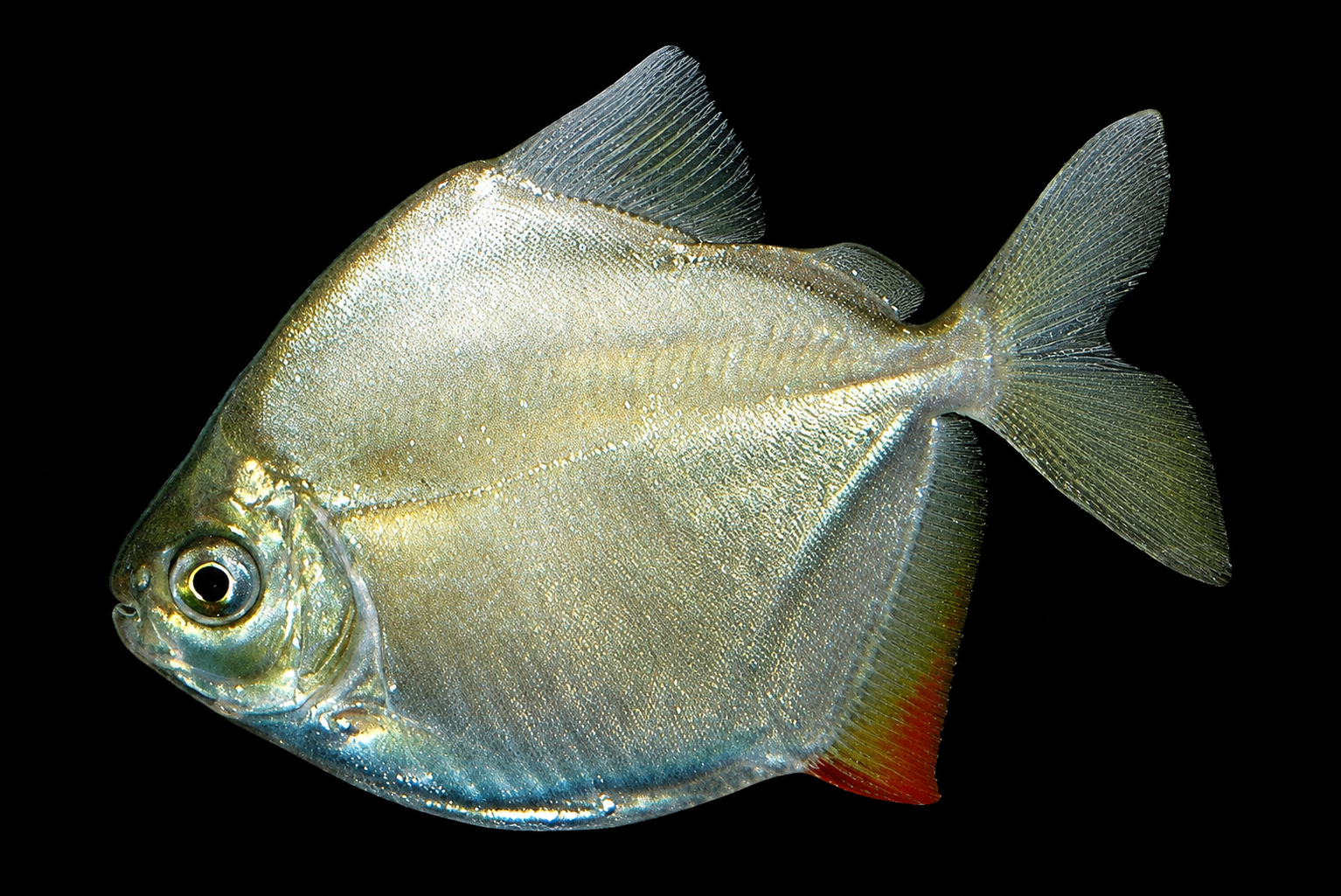
Silver Dollars appeared repeatedly in both sets of supplied material.
They are active midwater fish that should be kept in a group. Their bodies are tall and broad, so established individuals are not as easy for an Oscar to swallow as small tetras or livebearers.
They are also South American freshwater fish and can be kept under broadly similar conditions.
Why the combination may work
- active schooling behaviour
- generally not looking for fights with the Oscar
- uses the middle swimming area
- adult body shape is more suitable than small community fish
- adds movement to a large cichlid setup
What to watch
Silver Dollars are not fish to add one at a time.
A proper group raises the swimming-space and filtration requirement significantly. Undersized individuals may still become targets.
My judgement from the supplied material
Silver Dollars make sense only when the aquarium is designed as a large-fish community system, not when it is already just large enough for one Oscar.
Severum Cichlid
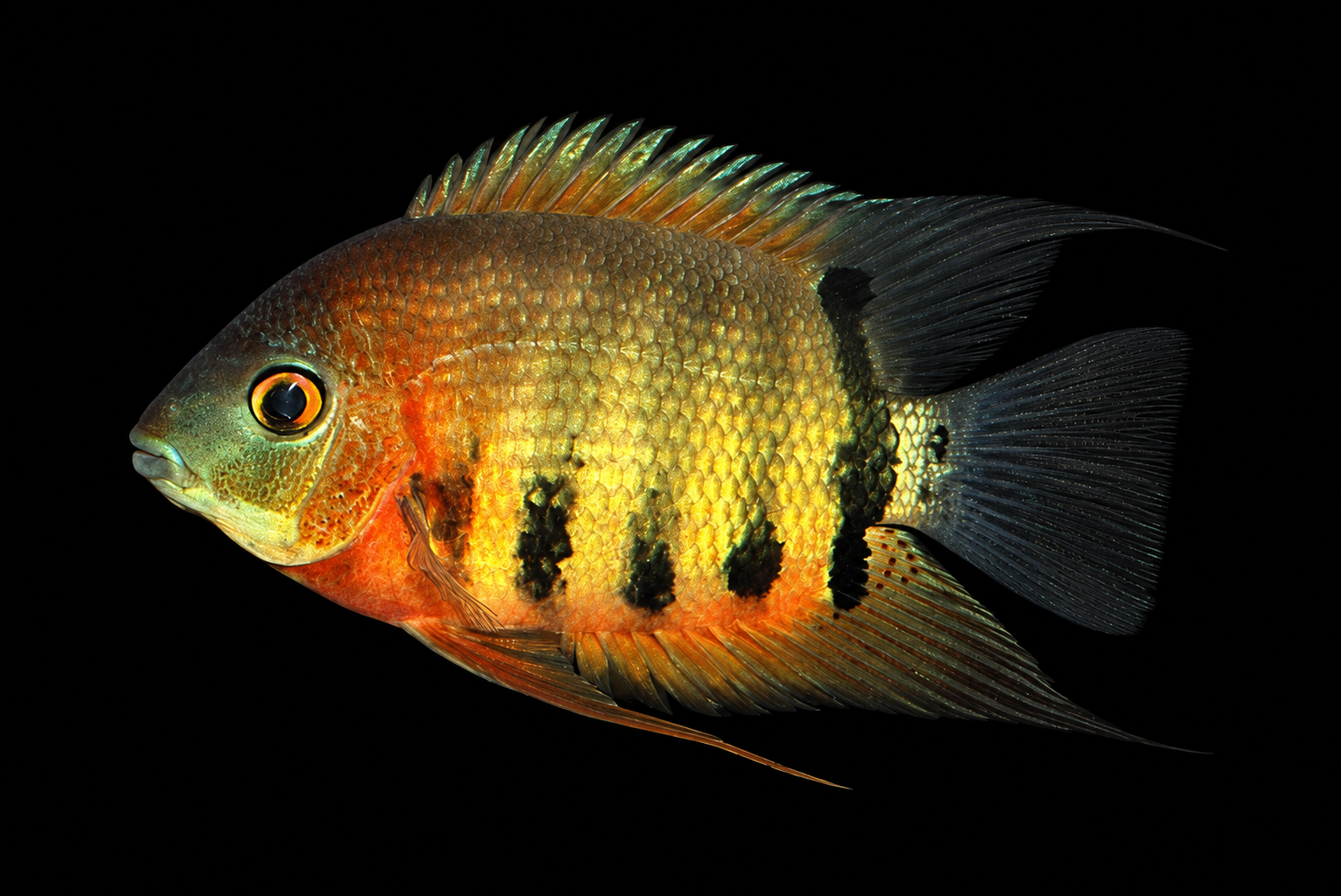
Severums receive some of the strongest support in the supplied material.
They can reach a useful adult size, grow quickly enough to reduce the long-term size gap and are often described as less confrontational than many Central American cichlids.
At the same time, an established Severum is usually robust enough to avoid being treated like a small, defenseless community fish.
Why the combination may work
- South American origin
- similar general water and aquarium setup
- body size is more suitable for an Oscar tank
- usually described as relatively calm
- several colour varieties are available
What to watch
“Usually calmer” does not mean every Severum behaves the same.
It is still a cichlid. Adult size, territory and individual temperament decide the result. A small Severum may also lose food or remain under pressure from a larger Oscar.
My judgement from the supplied material
For keepers who want another cichlid, Severum is one of the first options worth examining because the supplied material repeatedly supports its size, behaviour and compatible setup.
Chocolate Cichlid
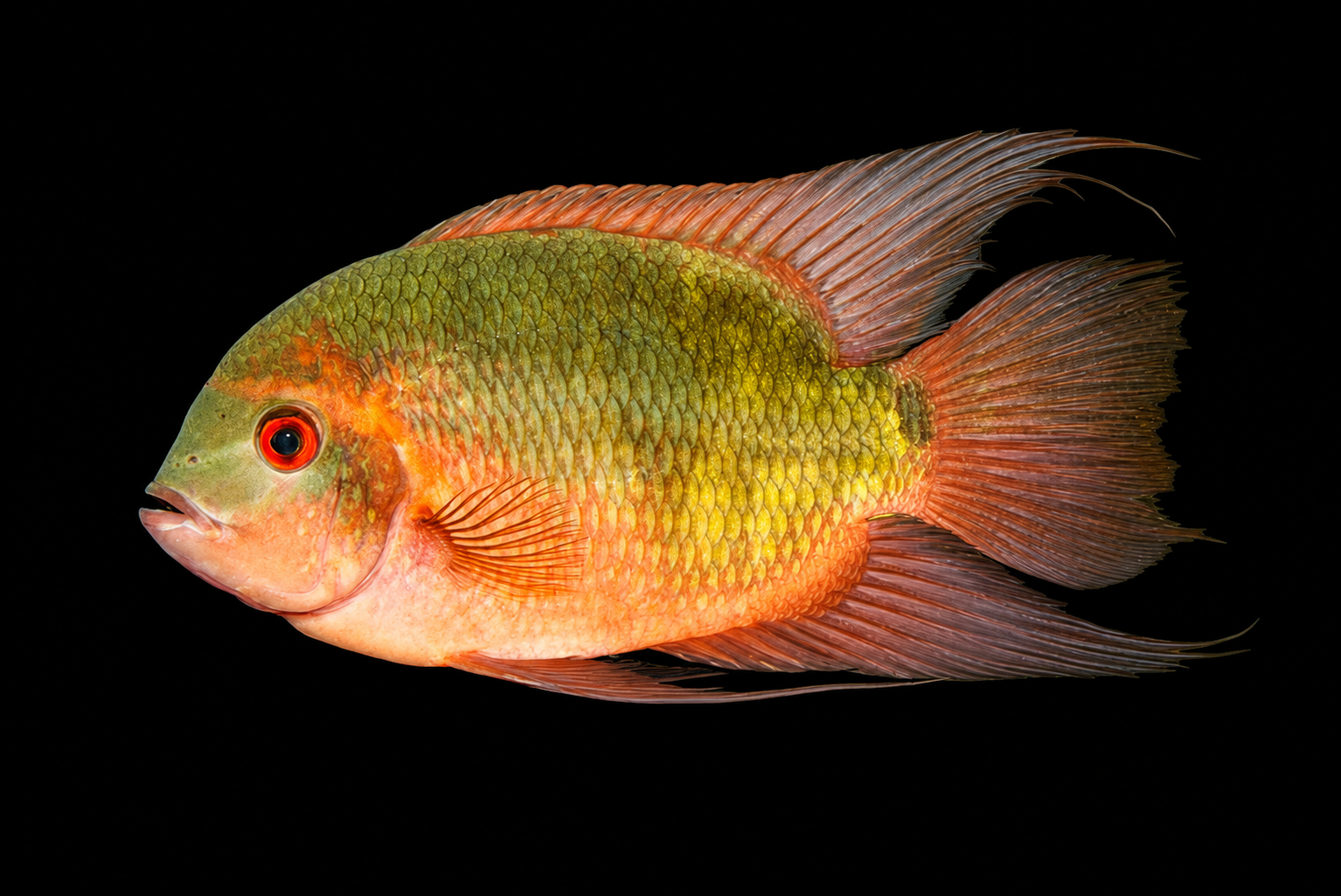
Chocolate Cichlids were included because they can become large and develop a broad, deep body.
One supplied example kept a Chocolate Cichlid with a Tiger Oscar in a 180-gallon aquarium, roughly 680 litres, for about two years without a reported conflict.
That is one keeper’s experience, not a promise for every aquarium.
Why the combination may work
- both fish can reach a large adult size
- Chocolate Cichlid has a deep body
- South American origin
- similar general water and layout direction
- aggression was described as moderate in the supplied experience
What to watch
Two deep-bodied cichlids consume a great deal of space and create a high bioload.
Even without fighting, the aquarium may become cramped when both fish mature.
My judgement from the supplied material
Chocolate Cichlid is more suitable for someone who already owns a genuinely large aquarium. It is not a fish to add simply because one corner still looks empty.
Geophagus
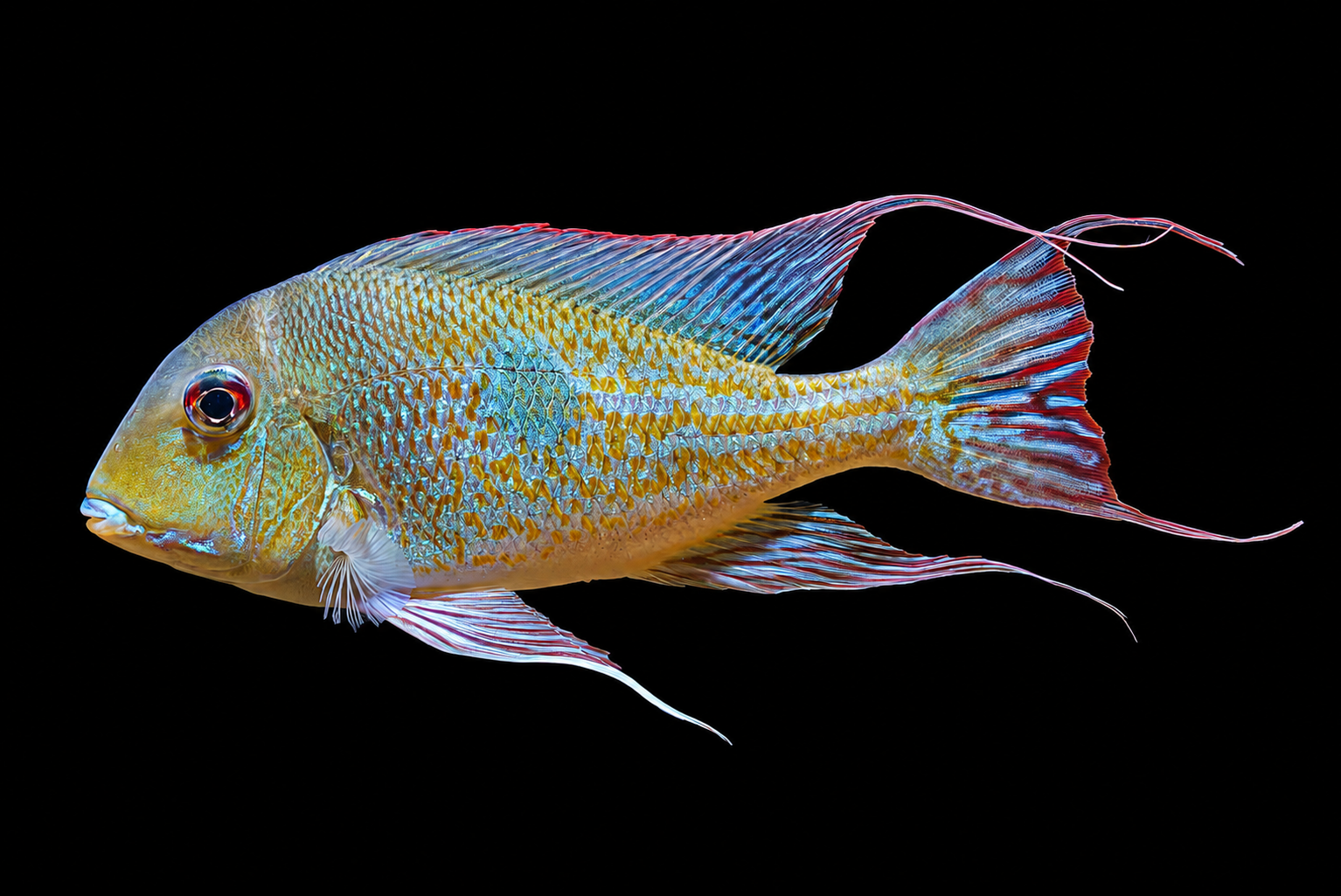
Geophagus spend much of their time in the lower and middle parts of the aquarium.
Their sand-sifting behaviour also uses the tank differently from an Oscar. Several larger Geophagus types were described as possible companions in a South American setup.
Why the combination may work
- uses a different part of the aquarium
- many species come from South America
- distinctive sand-sifting feeding behaviour
- established fish may become large enough to live with an Oscar
The main risk is growth rate
The supplied material described Geophagus that were grown for two years until they reached about 5–6 inches before an Oscar was introduced.
It also warned that if both fish begin at a very small size, the Oscar may grow much faster and eventually treat the Geophagus as a target.
My judgement from the supplied material
I would not add small Geophagus to an aquarium containing a much larger Oscar.
For this combination, size at introduction matters more than the name of the fish alone.
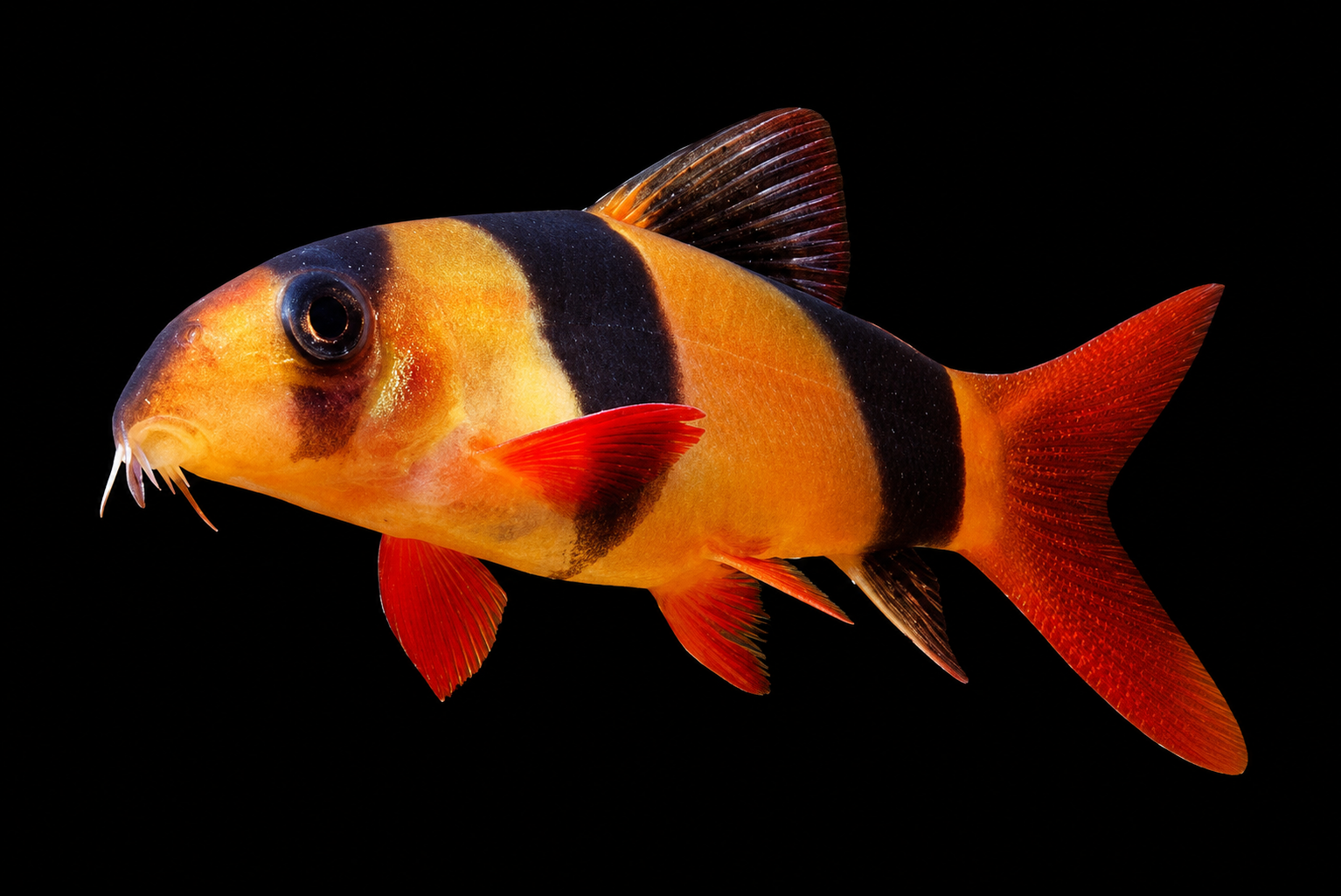
Clown Loach
Clown Loaches spend much of their time near the bottom, around wood, rocks and hiding places. They usually do not challenge an Oscar throughout the middle swimming area.
They can also become large when properly maintained.
The problem is that shop juveniles are often small, while their growth is slower than an Oscar’s.
Why the combination may work
- uses the bottom area
- spends time in hiding places
- lives in a social group
- established adults develop a more substantial body size
What to watch
- do not add a Clown Loach that can fit in the Oscar’s mouth
- keep a proper group rather than one isolated fish
- provide a long aquarium
- confirm that the loaches receive food
- remember that Oscars can dominate feeding time
One supplied source recommended at least a 6-foot aquarium for Clown Loaches in this type of setup.
For more context on their adult requirements, see our bottom-dwelling fish guide.
My judgement from the supplied material
I would consider this combination only when the Clown Loaches are already large enough and the aquarium can support a group, not a single specimen.
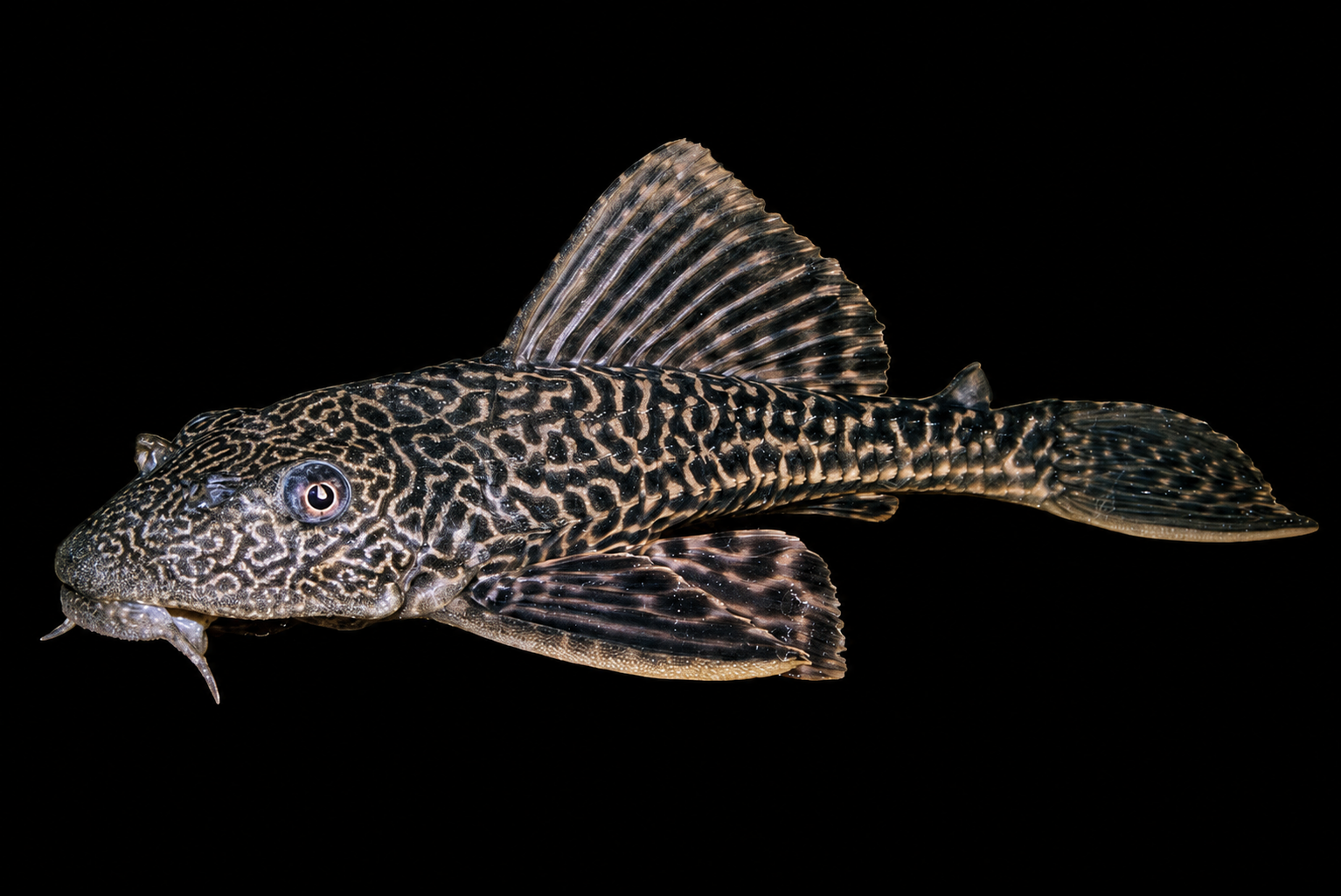
Common Pleco
The Common Pleco was included in the supplied material as an armored bottom-dwelling catfish.
Its body armor and position near the bottom may reduce trouble from an overly curious Oscar. It may also eat certain algae and food that reaches the substrate.
The same material warns against treating it as a cleaning service.
Why the combination may work
- armored body
- spends much of its time near the bottom
- does not usually occupy the Oscar’s main swimming area
- can become too large to swallow easily
What to watch
The supplied material describes Common Plecos reaching about 24 inches, more than 60 cm.
A large fish may move or damage decor, needs a very large aquarium and produces its own heavy waste load.
Read our Pleco guide for the long-term cleaner-fish problem before adding one for algae control.
My judgement from the supplied material
A Common Pleco may be considered as a tank mate, but it should not be bought to “clean the Oscar tank.”
Without a plan for its adult size, it simply adds another very large fish to an already demanding system.
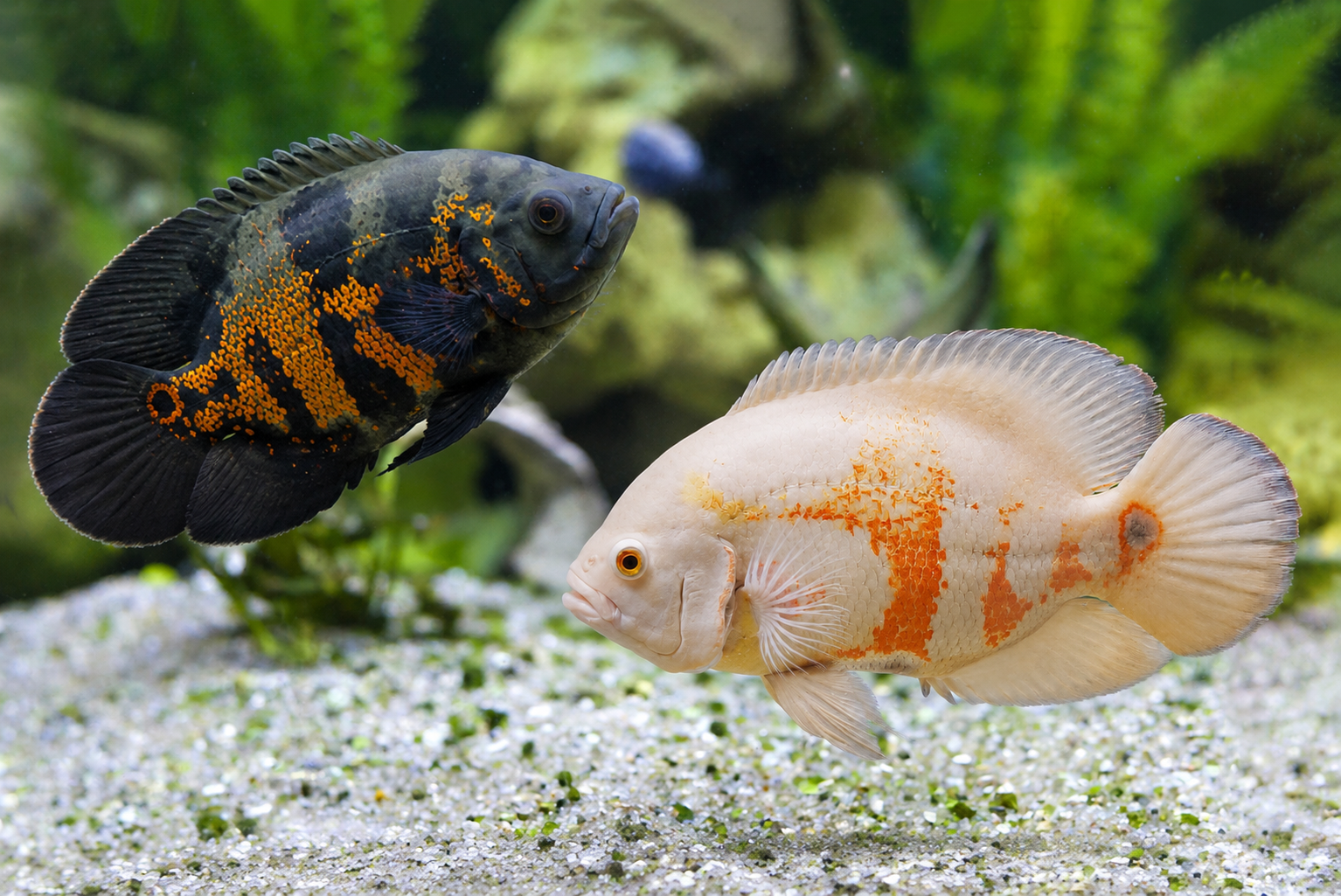
Another Oscar
Another Oscar is the easiest option to understand.
Many keepers like combining Tiger, Red and Albino Oscars because their colours differ while their basic water and feeding requirements are similar.
The supplied material states that multiple Oscars can be kept together when the aquarium and setup are suitable.
Why the combination may work
- same species
- similar water and feeding requirements
- different colour varieties can be combined
- no extreme growth-rate difference between unrelated species
What to watch
Adding a second Oscar significantly increases the aquarium requirement.
The supplied material recommends a 6-foot aquarium or larger for more than one Oscar. The same species does not guarantee compatibility, and Oscars can still become territorial or aggressive.
My judgement from the supplied material
I would not assume that two Oscars raised together will remain peaceful as adults.
Watch the fish closely and keep a realistic way to separate them if fighting becomes serious.
Other Fish Mentioned in the Supplied Material
The source material also mentioned:
- Arowana
- Blood Parrot
- Green Terror
- Jack Dempsey
- freshwater stingray
- Giant Gourami
- Electric Blue Acara
- Bala Shark
- True Parrot Cichlid
- several large catfish
- other Central and South American cichlids
Some of these combinations have worked for individual keepers.
However, the same material warns that Arowanas, stingrays and Giant Gouramis require exceptionally large systems, while Green Terrors, Jack Dempseys and other aggressive cichlids may create serious fighting risk.
They are better treated as advanced combinations rather than added to the main list.
Signs the Combination Is Failing
Based on the risks described in the supplied material, watch for:
- one tank mate being chased constantly
- a smaller fish hiding most of the time
- one fish being unable to eat
- the Oscar trying to bite or swallow the tank mate
- cichlid fights becoming more intense
- swimming space becoming visibly cramped
- several large fish being forced into one area
- water quality becoming increasingly difficult to maintain
Do not wait until one fish is badly injured before separating them.
Filtration and Space
Every option in this article adds bioload.
Silver Dollars and Clown Loaches require groups. Chocolate Cichlids, Common Plecos and another Oscar can all become large fish.
Tank mates therefore cannot be planned separately from adult aquarium space and filtration.
If the current aquarium is only large enough for one Oscar, do not assume there is spare capacity simply because the middle or bottom looks empty.
Plan the system around every fish at adult size. Large messy fish also make a reliable aquarium test kit more useful, and the causes in our dirty aquarium water guide become more relevant as stocking increases.
Conclusion
Oscar fish can live with other fish, but success depends heavily on aquarium size, fish size at introduction and the growth rate of every species.
The seven options discussed are:
- Silver Dollar
- Severum
- Chocolate Cichlid
- Geophagus
- Clown Loach
- Common Pleco
- another Oscar
This is not a ranking and it is not a guarantee.
The most important rules are:
- do not add fish that are too small
- do not ignore different growth rates
- provide more space than a single-Oscar setup
- make sure every fish receives food
- monitor aggression
- be ready to separate fish if the combination fails
Sometimes the best tank mate for an Oscar is no tank mate at all, especially when the aquarium is only large enough for one adult fish.
FAQ
Can Oscar fish live with other fish?
Yes, but no combination is guaranteed. Aquarium size, fish size and individual temperament can change the result.
What fish are commonly kept with Oscars?
The supplied material repeatedly mentions Silver Dollars, Severums, Plecos, Clown Loaches, Chocolate Cichlids, Geophagus and other Oscars.
Can small fish live with an Oscar?
Not safely if the fish can fit in the Oscar’s mouth. Oscars grow quickly, and slower-growing tank mates may become targets.
Can Oscars live with Silver Dollars?
They may work when the Silver Dollars are already large enough, kept in a proper group and provided with enough swimming space.
Can Oscars live with Severums?
They may work because their size and general setup requirements can be compatible, but both are cichlids and individual behaviour must be monitored.
Can Oscars live with Clown Loaches?
They may work when the Clown Loaches are already large enough, kept in a group and able to receive enough food.
Can Oscars live with a Common Pleco?
They may coexist because the Pleco is armored, but a Common Pleco can exceed 60 cm and will not clean the aquarium for you.
Can two Oscars live together?
Yes, but a much larger aquarium is required and compatibility is not guaranteed. The supplied material recommends a 6-foot aquarium or larger for multiple Oscars.
Related Buying Guides
Altum Angelfish Care in Malaysia: Tank Height, Water & Feeding
A Malaysia-focused Altum Angelfish guide covering true Altum identification, tall tank planning, soft acidic water, feeding, groups, tankmates and buying checks.
Read Guide → GuidesCommon Angelfish vs Altum Angelfish: What’s the Difference?
Compare common freshwater angelfish and true Altum by species, body shape, forehead, tank height, water, feeding and suitability for Malaysian fishkeepers.
Read Guide →Disclaimer & Guidance Notes:
The specifications, wattages, dimension figures, and platform availability of items mentioned in our guides are based on manufacturer specifications, online store datasheets, and local marketplace data at the time of publication. While we strive to verify all information for reliability, aquarium equipment can vary depending on manufacturer batch updates or specific marketplace suppliers. Ensure you consult with verified sellers or professional fish-keepers prior to configuring heaters, large canister filters, or specialized lighting systems.