What Can Bottom-Dwelling Fish Live With? 7 Tank Mate Rules for Beginners
Which bottom-dwelling aquarium fish can live together? This beginner guide covers corydoras, otocinclus, plecos, kuhli loaches, horseface loaches, clown loaches and German blue rams.
Written by Eu C., a Malaysia-based aquarium hobbyist and editor of Akuarium.my.
Guide section
Freshwater Basics
Practical fish choices for new Malaysian freshwater aquarium keepers.
Many beginners see corydoras, plecos or loaches sitting near the substrate and immediately call them “cleaner fish.”
Fish shops may also say something like:
Add a few and they will finish leftover food, eat algae and clean the bottom.
That is only partly true.
Bottom-dwelling fish do search around the substrate, wood and rocks for food, but they are not rubbish bins. They do not replace water changes, gravel cleaning or proper filtration.
If they are expected to survive only on whatever the other fish leave behind, the so-called cleaners may be the first fish in the tank to become thin and unhealthy.
When I choose tank mates for bottom-dwellers, I look at:
- adult size
- whether the fish needs a group
- competition for caves and bottom territory
- whether the substrate can damage barbels or skin
- whether upper fish will take all the food
- whether dedicated sinking food is needed
- whether the fish may eat shrimp, snails or small fish
- breeding territory
- waste production
- aquarium length and usable bottom area
This guide covers seven confirmed bottom-dwelling fish groups: corydoras catfish, otocinclus catfish, plecos, kuhli loaches, horseface loaches, clown loaches and German blue rams.
They may all spend time near the bottom, but their care and tank mate requirements are completely different.
Some are excellent beginner community fish. Some need an established aquarium. Others look small in a shop but eventually become completely unsuitable for an ordinary home tank.
For fish that mainly use the middle of the aquarium, read our mid-level fish tank mate guide. For surface and upper-level fish, read our upper-level fish tank mate guide.
Quick Answer: Which Bottom-Dwellers Are Easiest to Mix?
| Fish | My view | Main issue |
|---|---|---|
| Corydoras catfish | My easiest beginner bottom-dweller | Needs a proper group and proper food, not leftovers |
| Otocinclus catfish | Peaceful, but not for a newly set-up tank | Can starve when the aquarium is too new or too clean |
| Pleco | The widest variation, so the label alone tells you very little | Adult size, diet and waste production vary enormously |
| Kuhli loach | Very peaceful, but easy to overlook | Needs company, shelter and a calm feeding environment |
| Horseface loach | Usually not difficult because of aggression | Needs suitable soft substrate for burrowing |
| Clown loach | Not suitable for an ordinary beginner small tank | Grows large and needs a group |
| German blue ram | Beautiful, but not a normal peaceful bottom fish | Water quality, warmth and breeding territory matter |
My view is straightforward:
- For the easiest beginner bottom group, I would choose corydoras catfish
- I would never rely on otocinclus as the only solution to algae
- Before buying a small pleco or clown loach, I would check its adult size
- With shy kuhli loaches, I would avoid a tank full of rough, fast feeders
- With German blue rams, I would remember that they are cichlids, not harmless bottom decorations
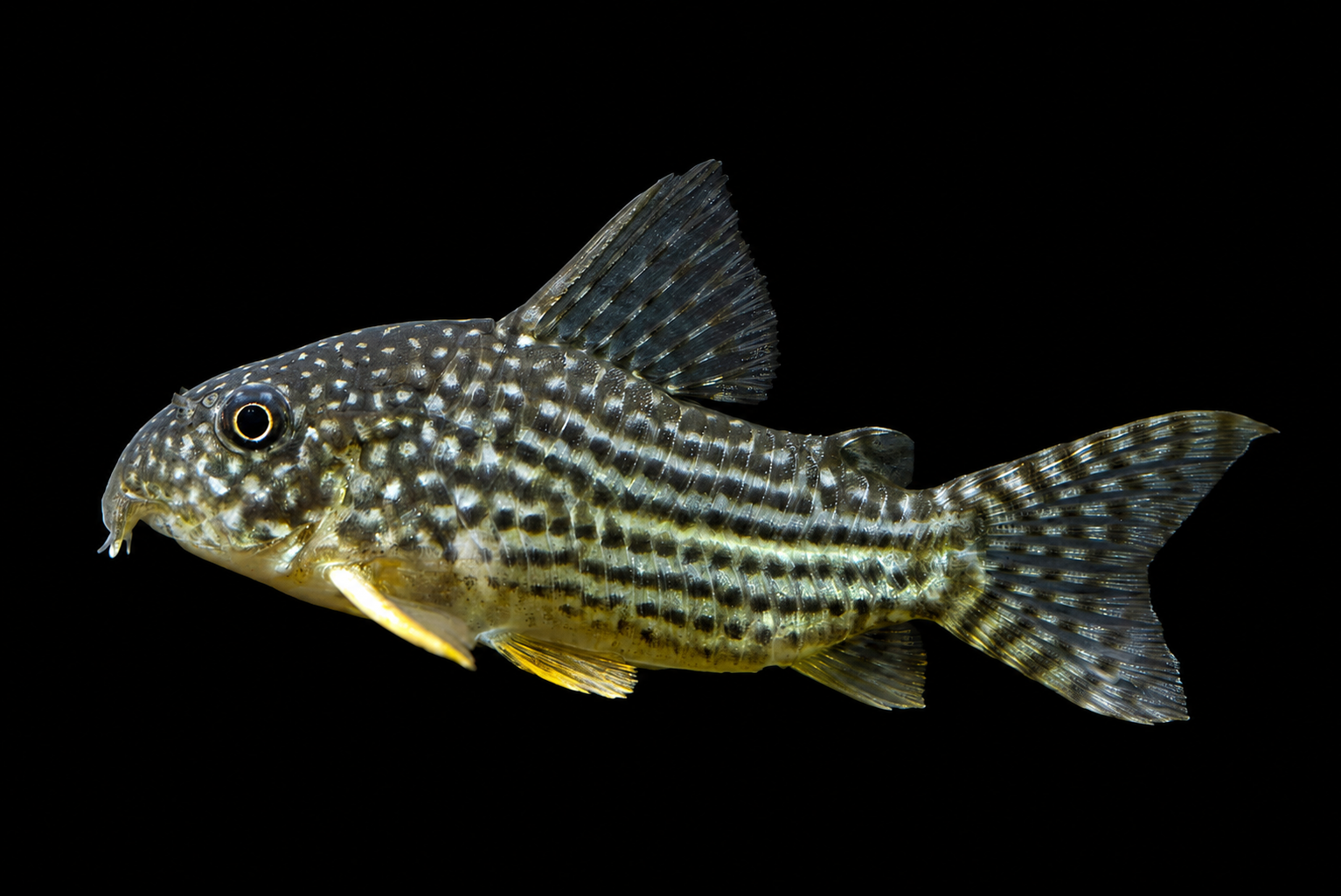
1. Corydoras Catfish: My Easiest Beginner Bottom Fish, but Not a Rubbish Cleaner
Corydoras catfish is a common name for a large group of small bottom-dwelling catfish in the Corydoradinae group.
They have visible barbels around the mouth and use them to search the substrate for food. Many people see that behaviour and assume they eat every kind of waste.
They are looking for food. They are not maintaining the aquarium for you.
Why I am comfortable recommending corydoras
Most common small corydoras are peaceful. They rarely attack upper-level fish and usually do not try to control the whole aquarium.
Tank mate directions I am more comfortable with include:
- harlequin rasboras
- cardinal tetras
- rummy-nose tetras
- peaceful small community fish
- fish that do not take every piece of sinking food
The beginner mistakes I would avoid
Keeping only one or two
Corydoras are not fish I would keep alone as a decoration in one corner.
A very small number may stay more nervous and show less natural activity. Instead of buying one of every bottom fish, I would keep a proper group of one suitable corydoras type.
Expecting them to live on leftovers
Food missed by other fish is not a complete diet.
Corydoras still need suitable sinking food. During feeding, I would check that the food actually reaches them instead of disappearing halfway down.
Using a rough or dirty substrate
Corydoras repeatedly search the bottom with their barbels and belly close to the substrate. Rough, sharp or badly maintained substrate can contribute to damaged barbels and poor condition.
I prefer fine sand or a smooth, rounded substrate over a sharp decorative bottom that ignores how the fish actually feeds.
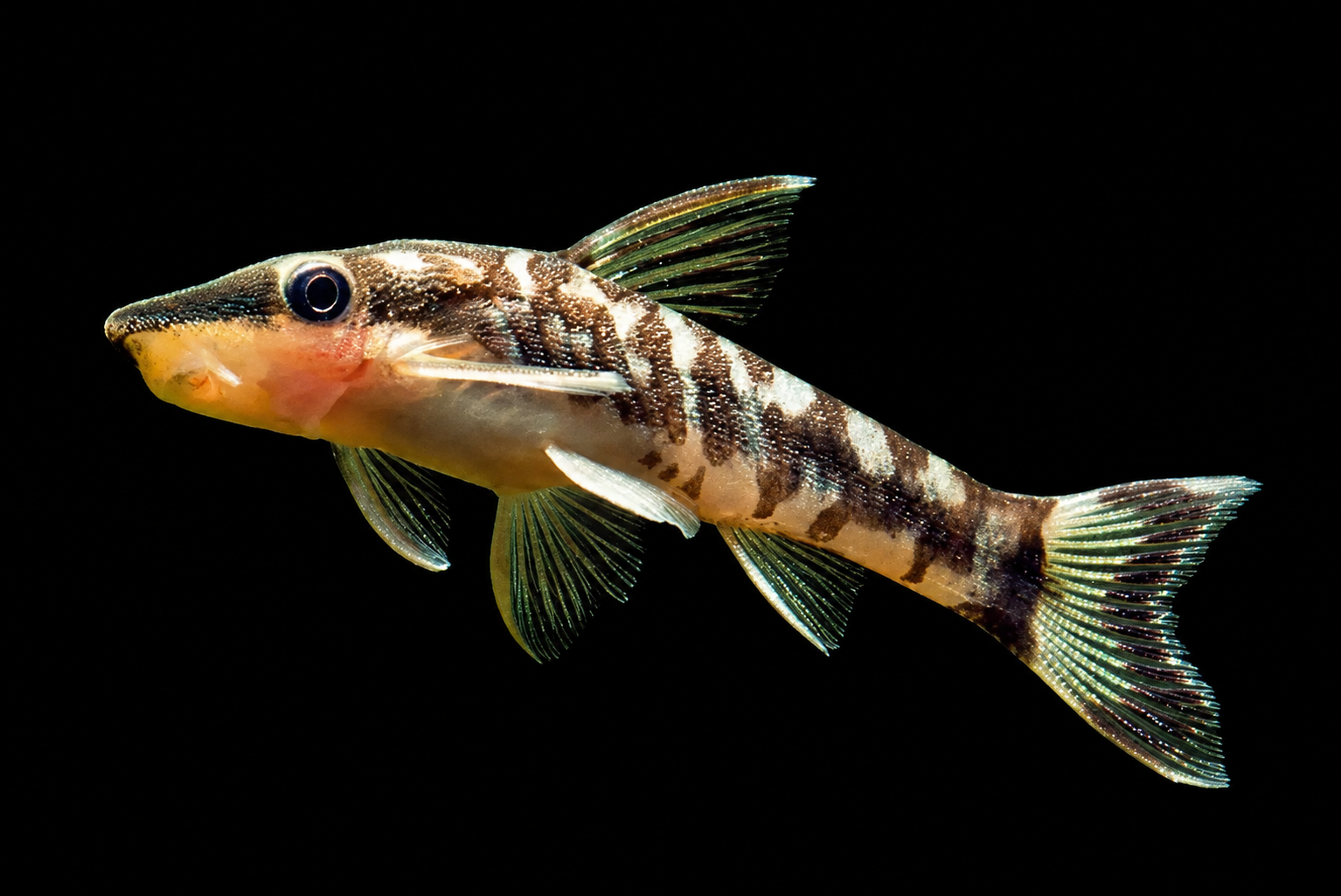
2. Otocinclus Catfish: It Eats Algae, but It Cannot Live on a Clean Label
Otocinclus catfish refers to small suckermouth catfish in the Otocinclus group.
They are small and peaceful, and they do graze on soft algae and biofilm growing on aquarium surfaces.
The problem is that many people translate “eats algae” into “does not need feeding.”
I strongly disagree with that approach.
Why I would not rush otocinclus into a new tank
A newly set-up aquarium may not have enough stable algae and biofilm.
Clean glass looks good to the owner, but it may mean there is very little natural grazing food for a newly introduced otocinclus.
These fish also do not usually charge into a feeding crowd like active tetras. Even without obvious fighting, they can slowly lose weight.
Better tank mate direction
- calm small schooling fish
- corydoras catfish
- peaceful bottom fish that do not chase them
- an established planted tank with stable biofilm
My view
Otocinclus may help with some soft algae, but it cannot replace:
- sensible lighting hours
- controlled feeding
- normal water changes
- removal of organic waste
- better nutrient and flow management
When an aquarium has an algae problem, I would deal with the cause instead of repeatedly adding more “cleaner fish.”
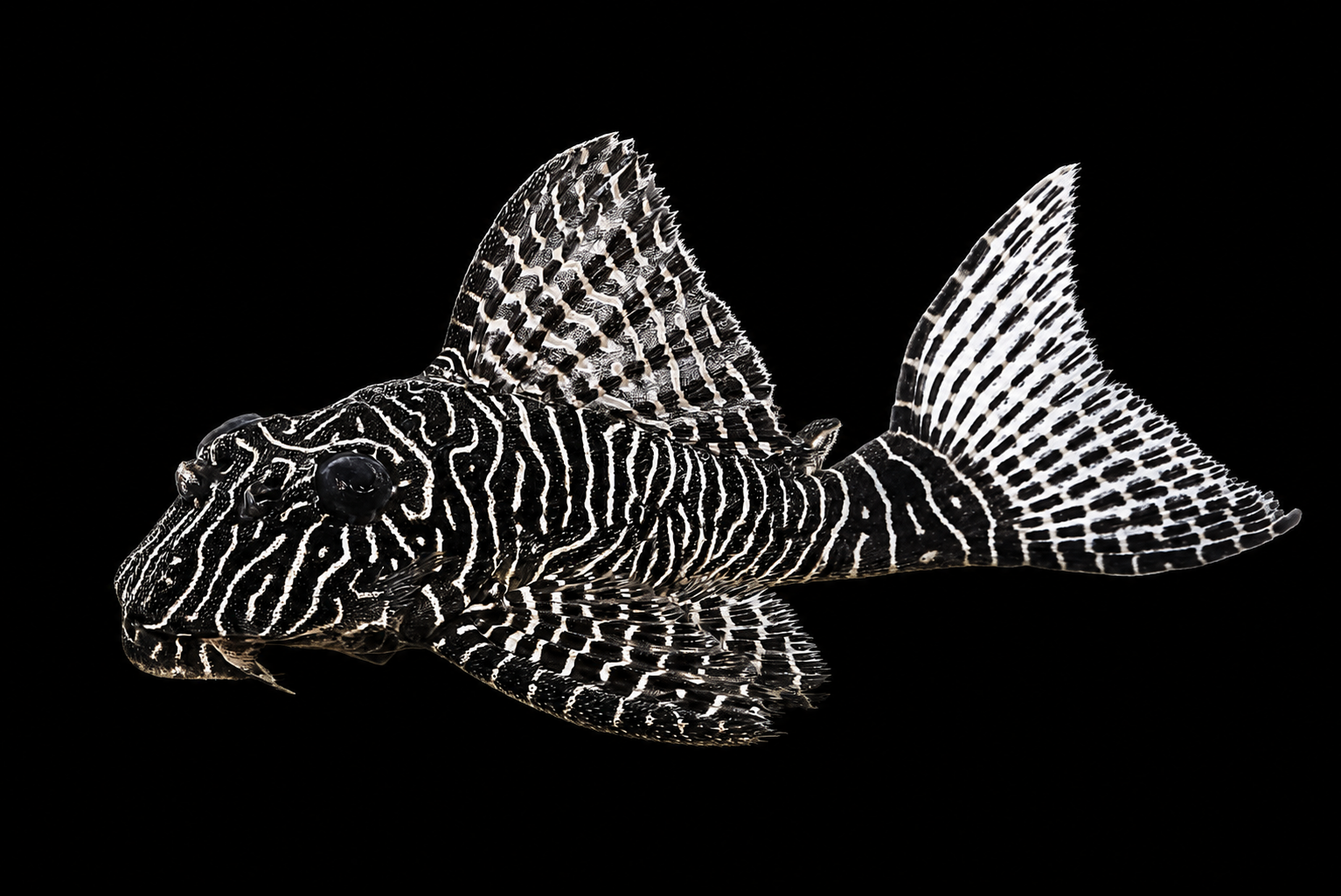
3. Pleco: Not Every Species Eats Algae, and Not Every Species Fits a Small Tank
Pleco is a broad aquarium name used for suckermouth armoured catfish in the Loricariidae family.
This group varies enormously.
Some types remain fairly manageable. Others grow far beyond what an ordinary home aquarium can support.
A shop label that only says “Pleco” is not enough information.
What I would confirm before buying
- exact species or L-number
- adult size
- diet
- whether wood is important
- whether it needs more plant material, algae-based food or protein
- cave and territorial behaviour
- expected waste production
“It will never threaten small fish” is also too absolute
Most common plecos do not hunt small tetras like a predatory fish, but that does not make every individual and every species risk-free.
Large plecos take up space, create a lot of waste and may compete for caves at night. Some suckermouth catfish may also attach to a slow, weakened or large-bodied fish under the wrong conditions.
I would not automatically call a fish safe just because it stays near the bottom.
My conclusion
A pleco is not an aquarium requirement.
The right species in the right aquarium can be an excellent fish. The wrong species can grow from a small “cleaner” into a large animal that the tank, filter and owner were never prepared to support.
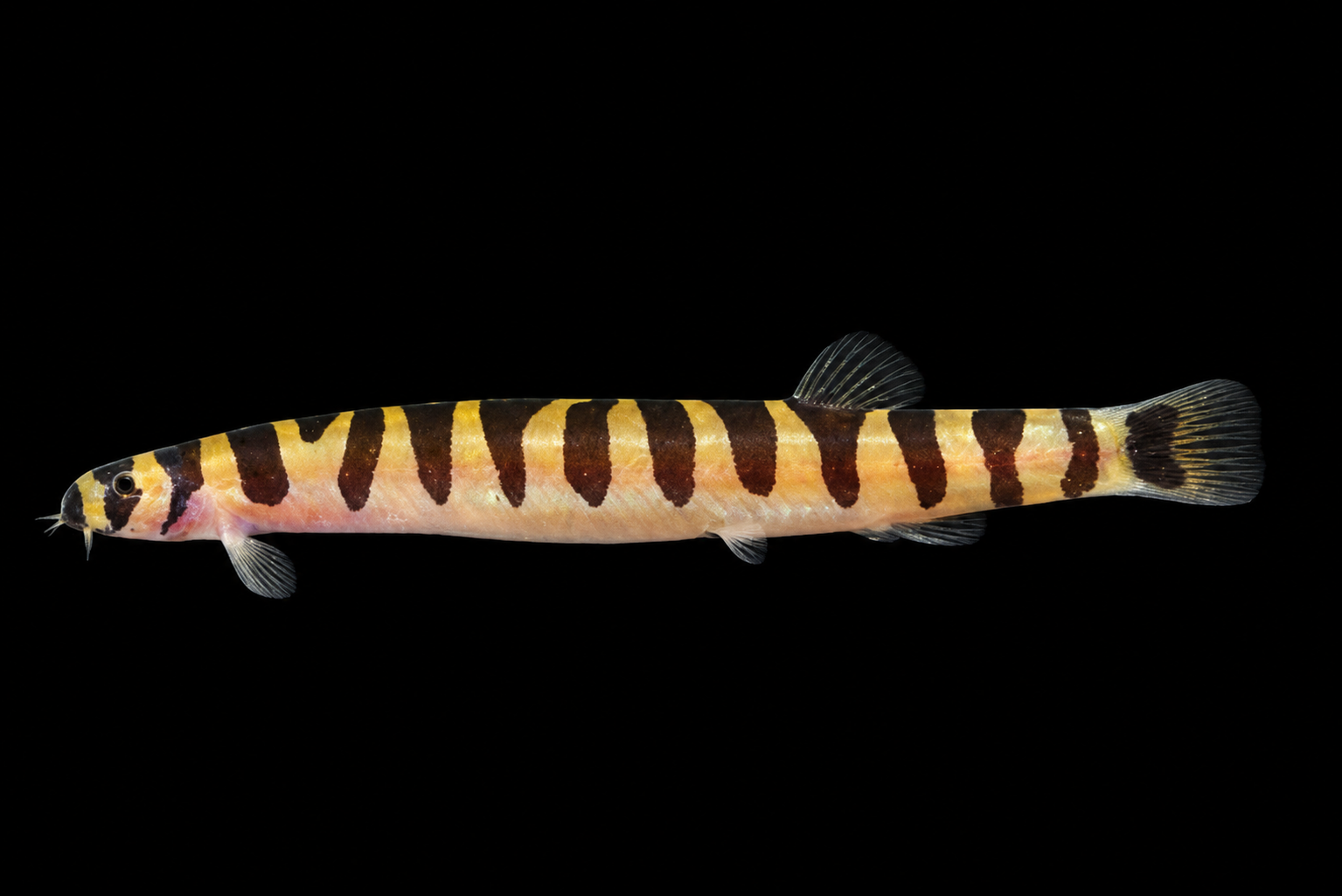
4. Kuhli Loach: Almost Never Looking for Trouble, but Easy to Leave Hungry
Kuhli loach is a common name for slender loaches in the Pangio group.
They like to shelter under wood, among leaves, inside safe gaps and close to the substrate. They are usually peaceful and rarely create trouble for fish using the upper levels.
Their real problem is not aggression. It is being too easy to ignore.
Why owners may rarely see them
- too few kuhli loaches
- not enough secure hiding places
- lighting that is too bright
- a noisy, highly active community
- all food being taken before it reaches the bottom
Kuhli loaches are often described as fish that finish leftovers, but my view stays the same:
Finding leftover food does not mean the fish can be left unfed.
Better tank mate direction
- calm small tetras
- harlequin rasboras
- peaceful corydoras
- fish that do not constantly disturb the substrate
- community fish without strong bottom territory
One practical point
Filter intakes and decoration gaps need to be safe.
A kuhli loach can enter spaces that look too small. Unsafe gaps may trap the fish or allow it to reach a filter compartment.
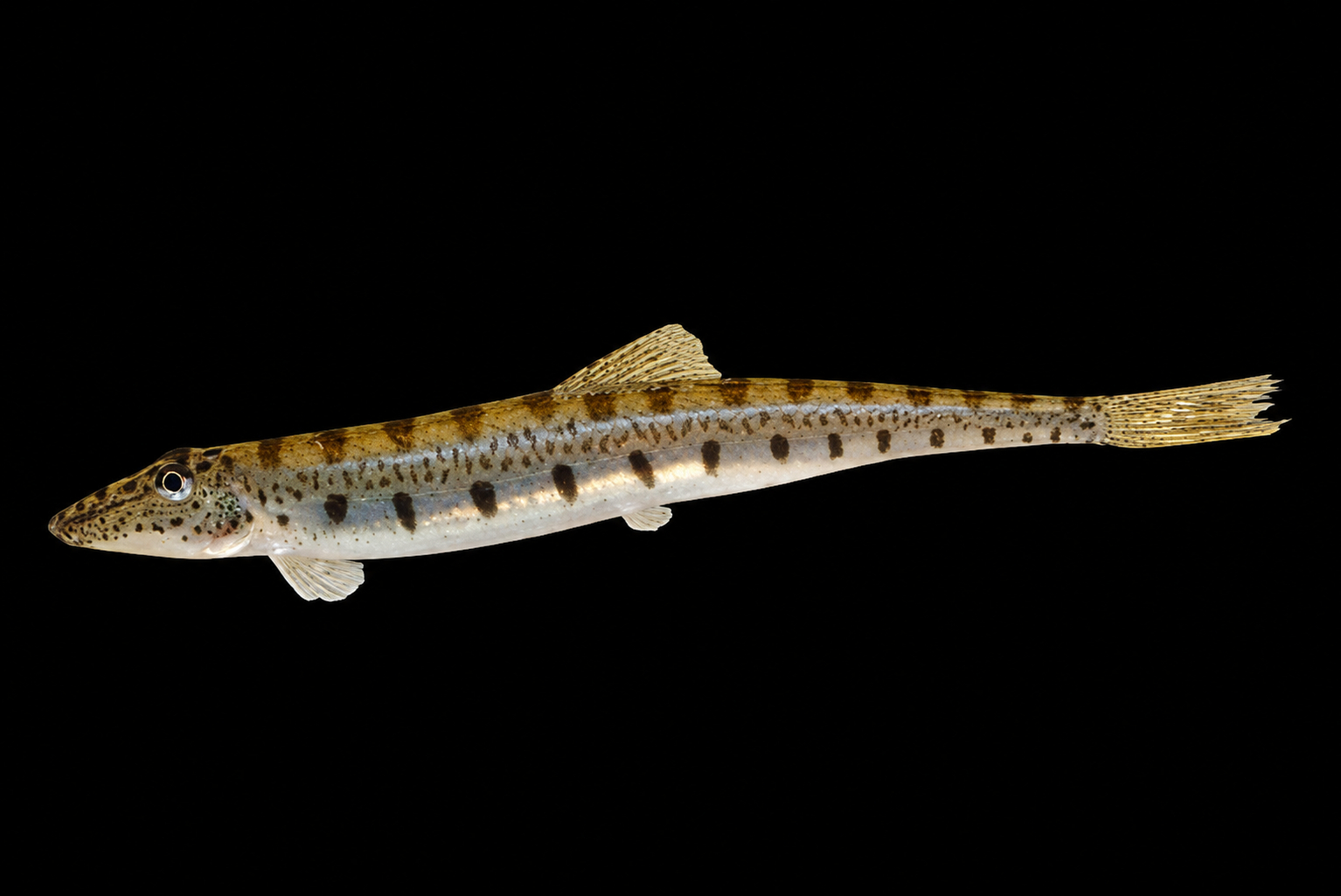
5. Horseface Loach: The Hard Part Is Usually the Substrate, Not the Tank Mates
Horseface loach is a common name for loaches in the Acantopsis group.
Their most obvious behaviour is burying themselves in the substrate, sometimes leaving only the head or eyes visible.
When I plan for this fish, my first question is not whether it can live with tetras. My first question is whether the substrate is suitable.
Environments I would avoid
- rough or sharp gravel
- large jagged stones across the bottom
- a bare tank with nowhere to burrow
- an already overcrowded bottom area
- a substrate with heavy accumulated waste
More reasonable tank mate direction
- peaceful mid- and upper-level fish
- community fish that do not attack bottom-dwellers
- fish that do not take every piece of sinking food
- an aquarium with enough usable bottom area
Horseface loaches normally do not fight upper-level fish for territory, but they are not tools for turning over and cleaning the substrate.
Burrowing is natural behaviour. It is not aquarium maintenance.
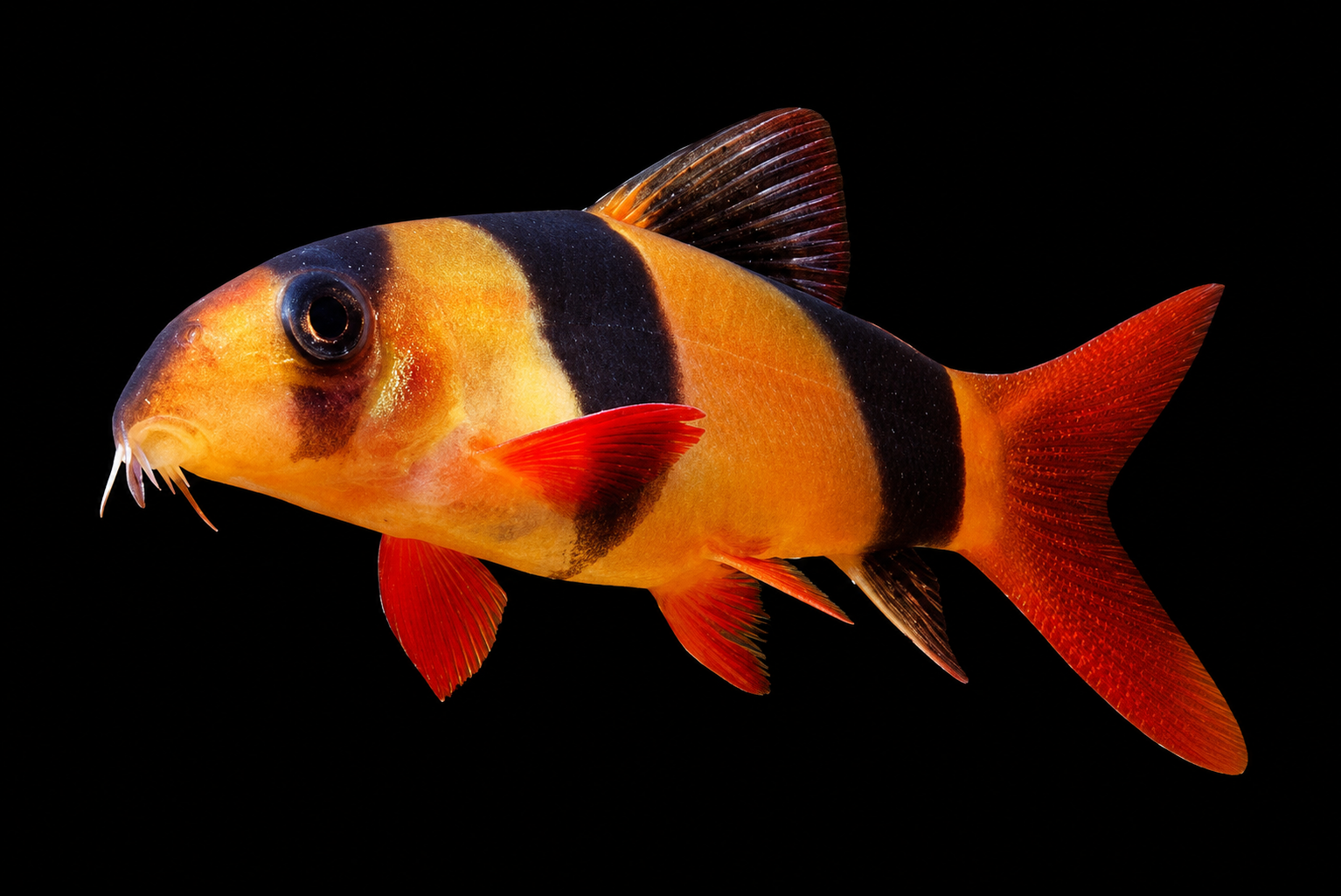
6. Clown Loach: Cute in the Shop, but Not a Small-Tank Fish as an Adult
The clown loach is Chromobotia macracanthus.
Juveniles are colourful and relatively small, so they are often sold as ordinary community bottom fish.
I would not recommend them for a typical beginner small aquarium.
The main issue is adult size, not a bad personality
Clown loaches grow large and are social fish that should not be planned as a single specimen.
That means the owner is not preparing space for one fish. The owner is preparing for a group of fish that will all grow, eat more and require stronger filtration.
Keeping one juvenile in a two-foot tank does not become a good long-term plan just because it fits today.
Other mixing points
- avoid slow fish that are easily disturbed by active loaches
- avoid an aquarium whose bottom area is already crowded
- do not treat them as part of a small shrimp-and-snail setup
- group interaction and feeding can be active
- food intake and waste increase as the fish grow
Clown loaches are not bad fish.
The problem is that many buyers only see the small fish in the shop and never plan for the adult group.
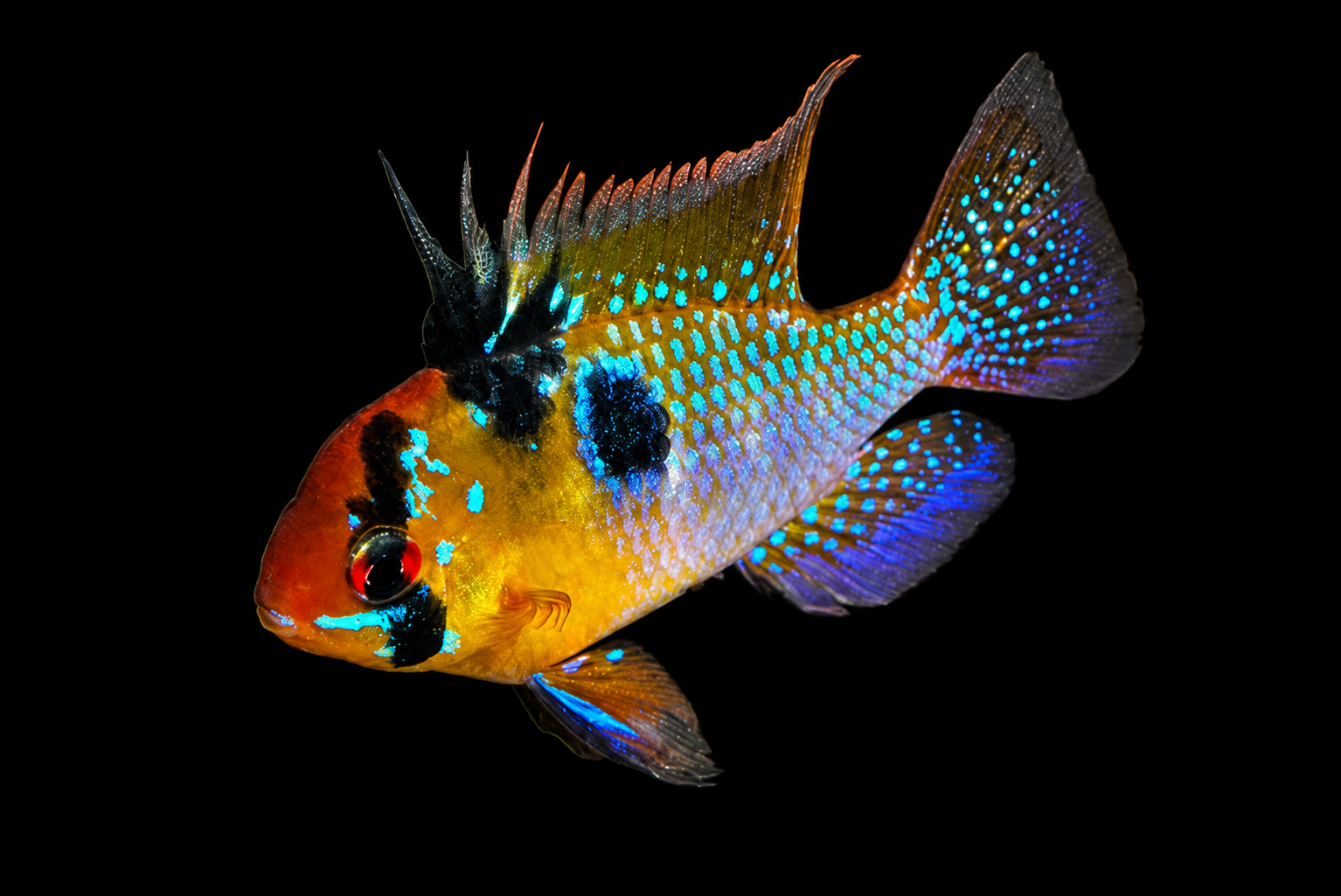
7. German Blue Ram: Small Body, but Still a Cichlid With Territory
The German blue ram is Mikrogeophagus ramirezi.
It is not a large fish, and its colour makes it very attractive for smaller community aquariums.
But I would not treat it as a harmless bottom decoration just because it is a dwarf cichlid.
It is still a cichlid.
Normal behaviour and breeding behaviour are not the same
Outside breeding, a ram may show little interest in upper-level schooling fish.
Once a pair begins defending eggs or a breeding area, bottom territory becomes much more important. Fish approaching that area, especially other bottom-dwellers, may be chased repeatedly.
Tank mates I would consider carefully
- mid- and upper-level fish that do not stay in the same bottom territory
- small schooling fish that are not small enough to be swallowed
- community fish in a tank with visual barriers
- fish that accept similar warm water and stable conditions
What I would not recommend casually
- several pairs in a small aquarium
- mixing several dwarf cichlid species without a proper territorial plan
- adding more fish simply to spread aggression
- overcrowding the bottom with other territorial fish
- adding rams before the aquarium is stable
German blue rams are beautiful, but they are not among the most forgiving beginner fish.
I would stabilise water quality, temperature and the bottom layout before asking what else can be squeezed into the same tank.
Which Combinations Make More Sense?
Beginner directions I am more comfortable with
Corydoras Catfish + Harlequin Rasboras
One group mainly uses the bottom and the other mainly uses the middle. Their temperaments are also easier to match.
Both fish still need proper groups, and sinking food must actually reach the corydoras.
Corydoras Catfish + Cardinal Tetras
This is a calmer community direction.
Do not overcrowd the aquarium. Keep the substrate clean and make sure the mid-level fish do not take every piece of food.
Kuhli Loaches + Peaceful Small Schooling Fish
This works best in a quiet aquarium with wood, plants and safe hiding places.
Do not keep disturbing the bottom or adding more fish just because the kuhli loaches are not visible all day.
Combinations that need clear conditions
Otocinclus + An Established Planted Tank
The main issue is not the tank mate list. It is whether the aquarium is mature, has stable biofilm and receives suitable supplementary food.
German Blue Ram + Peaceful Mid- and Upper-Level Fish
This needs space, visual barriers and stable water. The owner must be ready to manage breeding territory.
Horseface Loach + Peaceful Mid-Level Fish
The substrate must be fine and soft. Usable bottom area matters more than total water volume alone.
Combinations I would not recommend first to a beginner
- clown loaches in a small aquarium
- a large pleco in an ordinary small tank
- German blue rams with several territorial bottom fish
- otocinclus in a newly set-up aquarium
- kuhli loaches with rough, very fast feeders
- horseface loaches over sharp substrate
- any bottom fish treated as a cleaner that does not need proper food
Bottom Fish Are Not Cleaners: This Needs to Be Said Again
A bottom fish eating food that sinks does not make it responsible for leftovers.
A pleco grazing on some algae does not mean every pleco can solve an algae outbreak.
An otocinclus eating biofilm does not mean it belongs in a brand-new tank with no mature growth.
A loach searching through the bottom does not make it responsible for cleaning the substrate.
Aquarium maintenance still depends on:
- controlled feeding
- stable filtration
- regular water changes
- removal of excess waste
- sensible stocking
- choosing fish by adult size
Using fish as cleaning equipment usually creates more waste, not less.
Warning Signs That Need Action
- bottom fish repeatedly missing sinking food
- corydoras barbels becoming shorter or damaged
- kuhli loaches becoming thin
- plecos repeatedly fighting over caves
- a German blue ram controlling a large section of the bottom
- clown loaches crashing around an undersized tank
- a visibly sunken otocinclus belly
- a horseface loach unable to burrow normally
- the same fish being pushed away from the bottom every day
Not seeing fish bite each other does not prove the mix is successful.
The most common bottom-fish problem is quiet: the fish hides, misses food and slowly loses condition.
My Conclusion
Bottom-dwellers are not there to fill an empty part of the aquarium.
They have their own social needs, diet, territory and adult size.
Among these seven groups:
- For the easiest beginner bottom fish, I would choose corydoras catfish
- Before adding otocinclus, I would make sure the aquarium is mature
- Before buying a pleco, I would confirm the exact type and adult size
- With shy kuhli loaches, I would avoid too many fast feeders
- For horseface loaches, I would prepare fine, soft substrate first
- For clown loaches, I would plan the future large aquarium before buying juveniles
- With German blue rams, I would treat them as cichlids, not ordinary peaceful bottom fish
A good community tank is not complete just because every water level contains a fish.
It works when every species can move normally, eat properly and still fit the aquarium after it grows or begins breeding.
FAQ
Can I keep one corydoras catfish by itself?
I would not recommend it. Corydoras are social bottom fish, and a very small number is usually more nervous and less likely to show natural activity.
Will corydoras finish all leftover food?
No. They search for food that reaches the bottom, but they still need suitable sinking food. Leftovers from other fish are not a complete diet.
Is otocinclus suitable for a newly set-up aquarium?
Usually not. A new aquarium may not have enough stable biofilm and algae, so the fish may struggle to find enough food.
Do all plecos eat algae?
No. Diet varies greatly between pleco species. Some need more plant material, some use wood and some require more protein. The exact type must be confirmed.
Why are my kuhli loaches always hiding?
Possible reasons include too few loaches, insufficient shelter, lighting that is too bright, an overly busy community or food being taken before it reaches the bottom.
Can clown loaches live permanently in a two-foot tank?
No, not as a long-term plan. They grow large and need a group. A juvenile fitting today does not make the adult group suitable later.
Will German blue rams attack other fish?
They may be relatively calm outside breeding, but they are cichlids. A pair can become much more territorial around eggs or a breeding area, especially toward other bottom fish.
Can bottom fish replace gravel cleaning and water changes?
No. They eat some food and create waste of their own. Filtration, water changes and physical cleaning are still necessary.
Related Buying Guides
Altum Angelfish Care in Malaysia: Tank Height, Water & Feeding
A Malaysia-focused Altum Angelfish guide covering true Altum identification, tall tank planning, soft acidic water, feeding, groups, tankmates and buying checks.
Read Guide → GuidesCommon Angelfish vs Altum Angelfish: What’s the Difference?
Compare common freshwater angelfish and true Altum by species, body shape, forehead, tank height, water, feeding and suitability for Malaysian fishkeepers.
Read Guide →Disclaimer & Guidance Notes:
The specifications, wattages, dimension figures, and platform availability of items mentioned in our guides are based on manufacturer specifications, online store datasheets, and local marketplace data at the time of publication. While we strive to verify all information for reliability, aquarium equipment can vary depending on manufacturer batch updates or specific marketplace suppliers. Ensure you consult with verified sellers or professional fish-keepers prior to configuring heaters, large canister filters, or specialized lighting systems.