What Can Mid-Level Aquarium Fish Live With? 7 Tank Mate Rules for Beginners
Which mid-level aquarium fish can live together? This beginner guide covers harlequin rasboras, cardinal tetras, black skirt tetras, emperor tetras, rummy-nose tetras, pencilfish and angelfish.
Written by Eu C., a Malaysia-based aquarium hobbyist and editor of Akuarium.my.
Guide section
Freshwater Basics
Practical fish choices for new Malaysian freshwater aquarium keepers.
Many beginners build a community tank by buying two or three of every fish they like and putting everything into one aquarium.
The tank looks colourful and busy, but this is also one of the easiest ways to create problems.
Mid-level fish use the busiest part of the aquarium. Their swimming routes, feeding areas and territories overlap, so the wrong combination can lead to chasing, fin nipping and weaker fish missing meals.
I do not choose tank mates just because a care sheet calls both species “peaceful.”
I also look at:
- adult size
- whether the body is deep or slender
- whether one fish can fit into the other fish’s mouth
- swimming speed
- feeding speed
- chasing and fin-nipping behaviour
- required group size
- aquarium length and visual barriers
- how behaviour changes with age
This guide covers seven confirmed mid-level fish groups: harlequin rasboras, cardinal tetras, black skirt tetras, emperor tetras, rummy-nose tetras, pencilfish and freshwater angelfish.
They are not all aggressive, and they are not all gentle. The real difference is who chases, who takes all the food, who is too slow and who may eventually treat a smaller roommate as food.
For fish that spend more time near the surface, read our upper-level fish tank mate guide.
Quick Answer: Which Mid-Level Fish Are Easiest to Mix?
| Fish | My view | Main issue |
|---|---|---|
| Harlequin rasbora | My easiest beginner community choice | Needs a proper group, not two or three fish |
| Cardinal tetra | Peaceful, but more likely to lose out | Avoid large-mouthed or overly rough tank mates |
| Black skirt tetra | Can work, but not completely harmless | Small groups or cramped tanks may increase chasing and fin nipping |
| Emperor tetra | Attractive, but temperament is less predictable | Avoid long-finned, slow or very delicate fish |
| Rummy-nose tetra | Excellent schooling display | Slender body still makes it vulnerable to larger mouths |
| Pencilfish | Elegant, but has the narrowest tank mate choices | Slow swimming and slow feeding can leave it hungry |
| Freshwater angelfish | Not a normal small community fish | Adults may eat small fish and defend territory |
My view is straightforward:
- For the easiest beginner community, I would start with harlequin rasboras
- For tight, attractive schooling, I would consider rummy-nose tetras
- For a quiet and elegant aquarium, I like pencilfish, but not with fast feeders
- With black skirt tetras or emperor tetras, I would avoid slow fish with large fins
- With freshwater angelfish, I would plan around the adult fish, not the calm juvenile in the shop
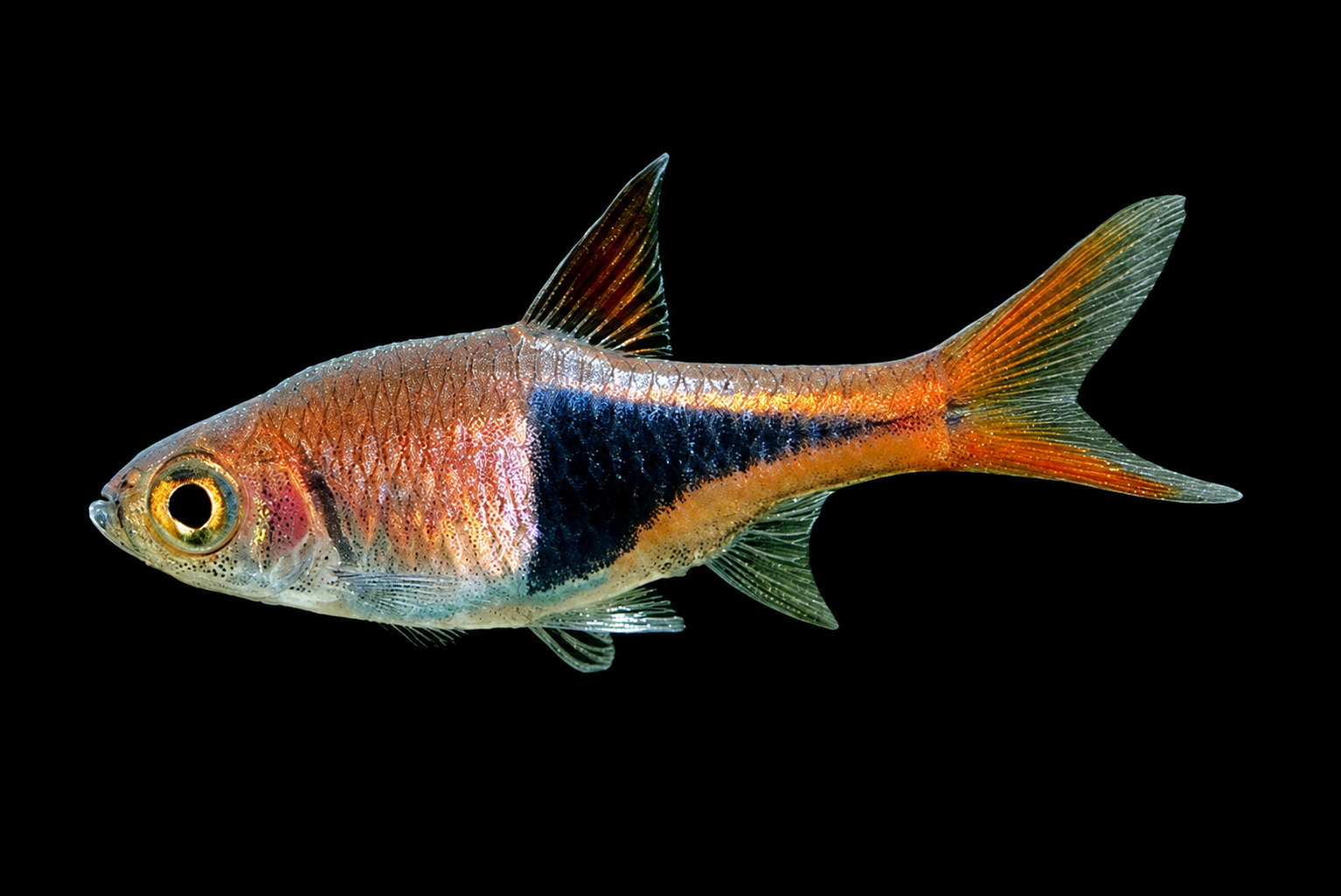
1. Harlequin Rasbora: My Easiest Mid-Level Fish for a Beginner Community
The harlequin rasbora is Trigonostigma heteromorpha. Despite occasional shop-name confusion, it is a rasbora rather than a tetra.
It stays relatively small, is usually peaceful and looks much better in a proper group than as two random fish mixed with six other species.
Its body is deeper than a cardinal tetra’s, and it is not an unusually slow swimmer. That makes it less likely to be pushed into a corner than very slender, timid fish.
Tank mates I am more comfortable with
- cardinal tetras
- rummy-nose tetras
- peaceful small schooling fish
- calm bottom fish
- community fish of a similar size without a large mouth
The mistake I would avoid
The main problem is not aggression. It is buying too few.
A tiny group may stay nervous, hide more and never show the schooling behaviour people expected. Instead of buying seven species in pairs, I would reduce the number of species and keep a proper harlequin rasbora group.
Harlequin rasboras are easy to plan around, but they are not decoration for filling every empty space. A short, overcrowded tank can make even peaceful fish behave poorly.
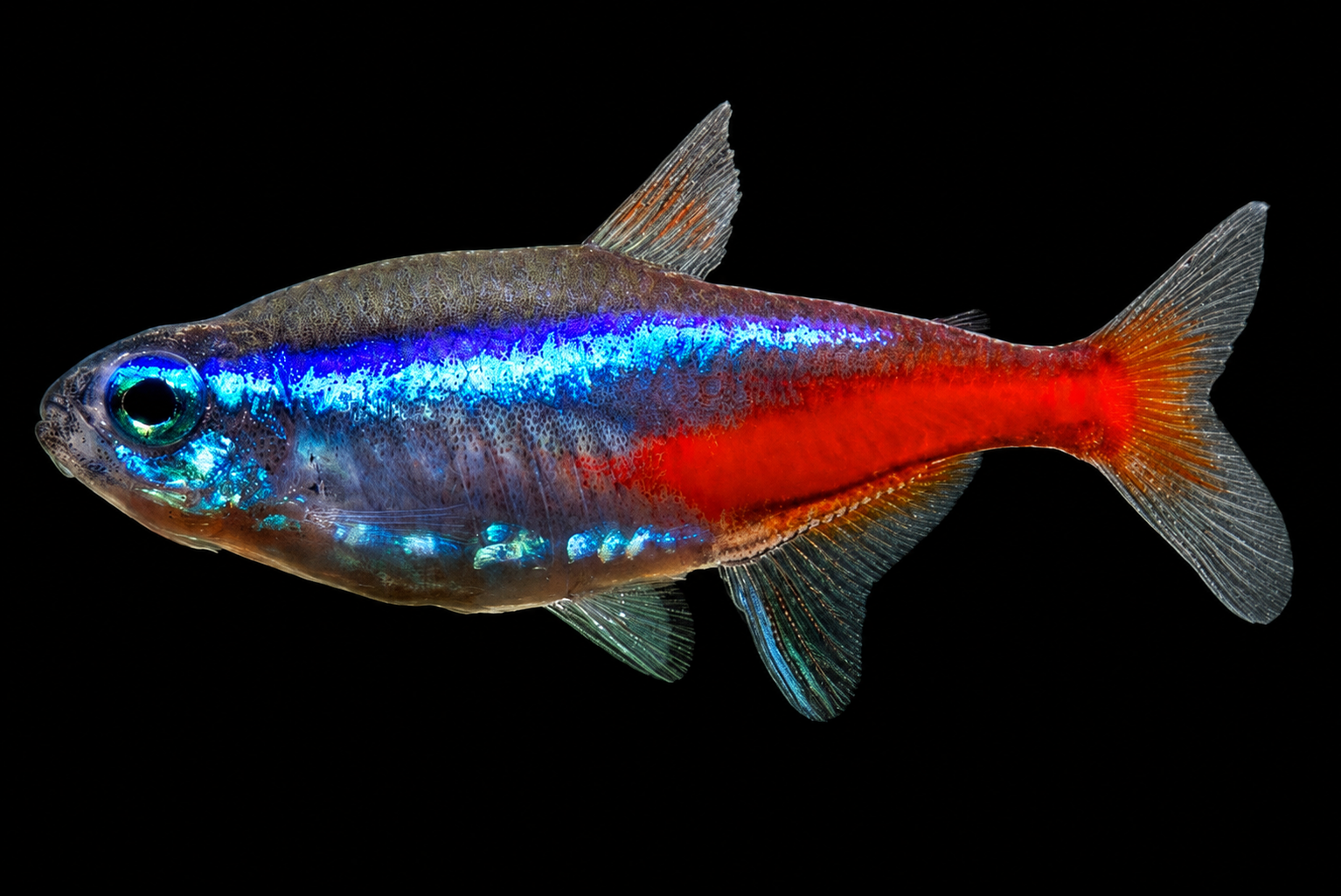
2. Cardinal Tetra: Peaceful, Slender and More Likely to Lose Out
The cardinal tetra is Paracheirodon axelrodi. It is also commonly sold as red neon tetra.
This is a classic small schooling fish. It is colourful and peaceful, but it can also be shy. I would not buy a few and drop them into a tank full of larger, faster fish.
Cardinal tetras have a slender body and a small mouth. In a mixed aquarium, their main risk is usually not attacking another fish. It is being chased, losing every feeding race or being swallowed by a larger tank mate.
Better tank mate direction
- harlequin rasboras
- rummy-nose tetras
- peaceful fish of a similar size
- calm bottom fish
- community fish that do not dominate every feeding
Tank mates I would not recommend first
- adult freshwater angelfish
- goldfish
- fish with a clearly larger mouth
- highly active fish that constantly crash through the group
- medium fish that repeatedly chase small fish
Many people see the slow swimming style of an angelfish and assume it must be gentle.
That is the wrong test.
If a cardinal tetra can fit into the other fish’s mouth, there is a risk.
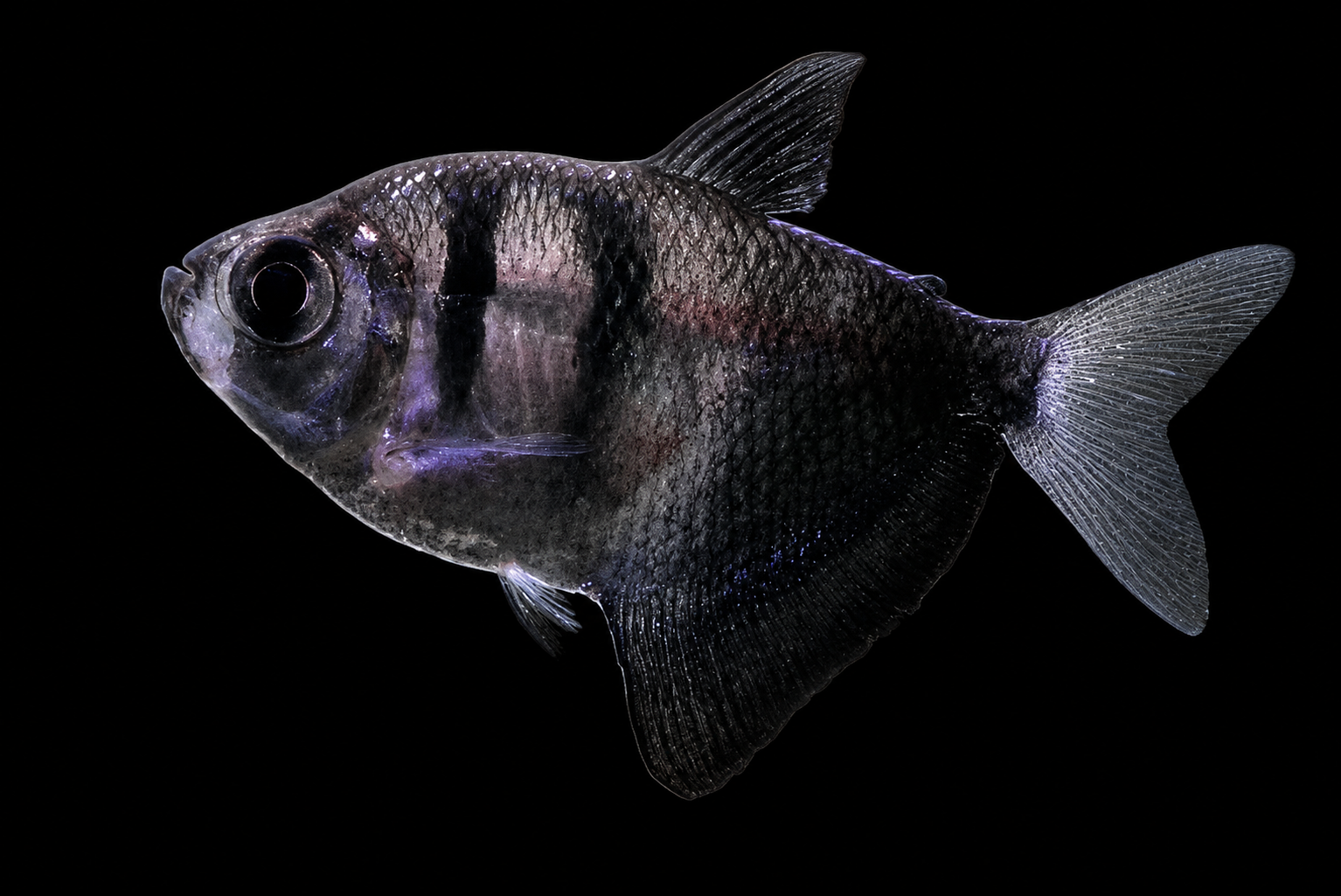
3. Black Skirt Tetra: A Stronger Body Does Not Mean Zero Fin Nipping
The black skirt tetra is Gymnocorymbus ternetzi. It may also be sold as black widow tetra or black tetra.
Its body is deeper and more solid-looking than a cardinal tetra’s. Because it is not extremely delicate, it can live with many community fish of a similar size.
I would still never describe it as harmless or suitable for every peaceful aquarium.
When the group is too small, the tank is cramped or a slow long-finned fish is nearby, black skirt tetras may chase or nip fins. Not every group will do it, but the risk is clearly higher than with harlequin rasboras.
More sensible tank mate direction
- similarly sized deep-bodied fish
- schooling fish that are not very slow
- stable bottom fish
- mid-level fish without large flowing fins
Combinations I would not use to test my luck
- guppies
- long-finned bettas
- slow long-finned fish
- very small fish that hide constantly
- keeping only a few black skirt tetras
A proper group gives them more opportunity to interact with their own species.
That is not a guarantee. If the same fish is chased every day or new damage keeps appearing on its fins, act instead of saying that they are only playing.
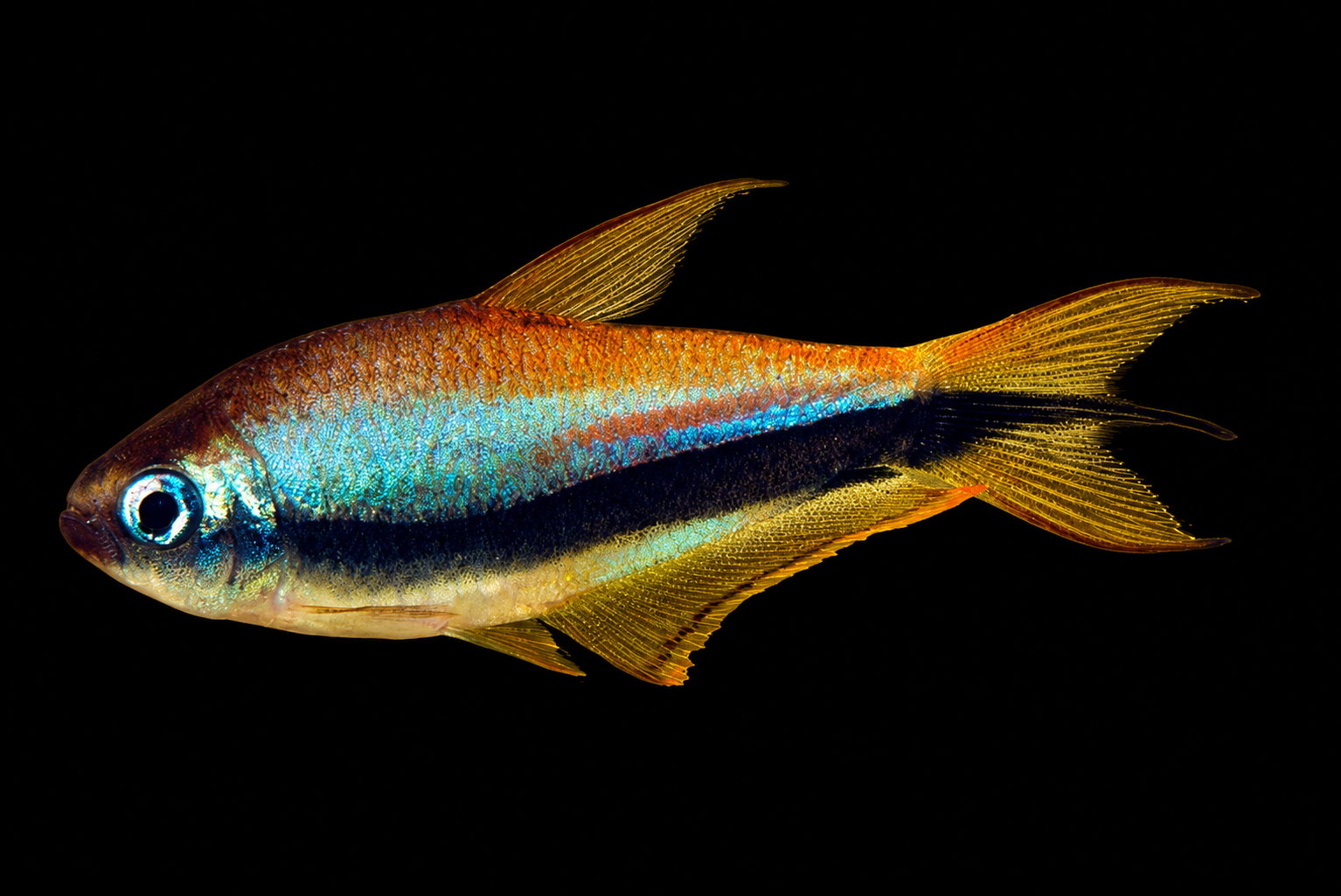
4. Emperor Tetra: Beautiful, but the Temperament Is Not Always Regal
The emperor tetra is Nematobrycon palmeri.
Males have distinctive colour and tail shape, and a good specimen can look excellent. But this is not a background fish that I would drop into every peaceful community without thinking.
Some emperor tetras display and chase within their own group. Others also direct that attention towards different species. Limited space and a poor group structure can make the behaviour more obvious.
Tank mates I would consider first
- fish of a similar size
- fish that are not very slow
- fish that are not extremely delicate
- short-finned community fish
- fish that can move away from a chase
Tank mates I would avoid
- guppies
- long-finned bettas
- pencilfish
- very small, slow or shy fish
- fish with exaggerated fins and tails
Emperor tetras are not impossible to mix. The mistake is judging compatibility by body length alone.
Two fish can be similar in size, but the slower fish with the larger fins will still be the easier target.
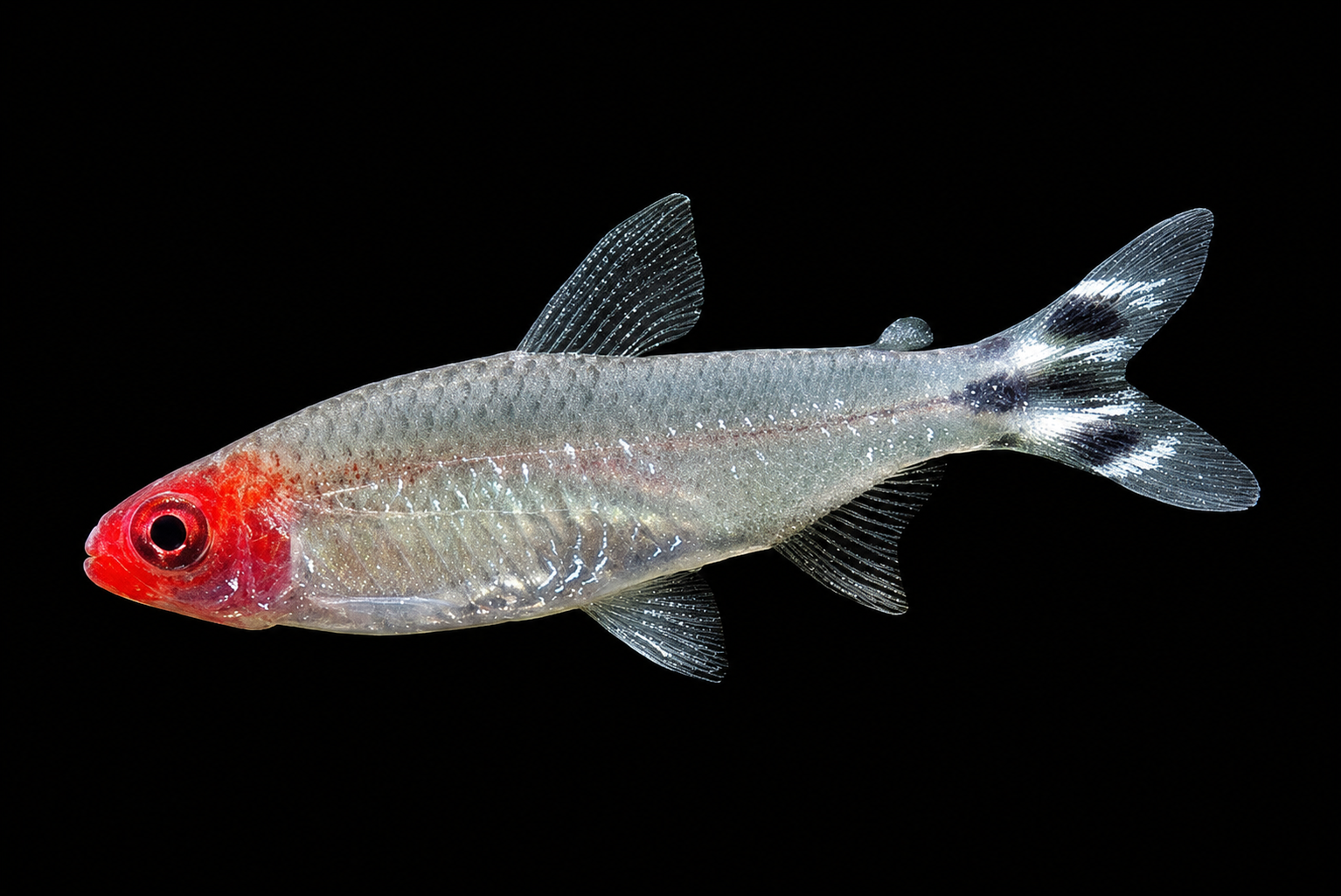
5. Rummy-Nose Tetra: Excellent Schooling Does Not Make It Safe With Large Fish
Rummy-nose tetra is a common aquarium name used for several similar-looking Petitella species. Without a confirmed species identification, this guide does not force the image into one exact species name.
Their main attraction is schooling.
With a proper group and a stable aquarium, they can turn together very tightly, which is why they are popular in planted and aquascaped tanks.
They are more active swimmers than cardinal tetras, so their tank mate choices can be slightly wider.
Better tank mate direction
- harlequin rasboras
- cardinal tetras
- peaceful schooling fish of a similar size
- mid-level fish that do not take all the food
- calm bottom fish
What still matters
The body is still slender.
With angelfish or another large-mouthed fish, swimming well does not make them permanently safe. A mistake at night, in a corner or during stress may still end with the smaller fish being eaten.
The original material also notes that hungry rummy-nose tetras may peck at tender plant growth. I would not label them plant-eaters because of occasional pecking, but an underfed community tank is not a good setup either.
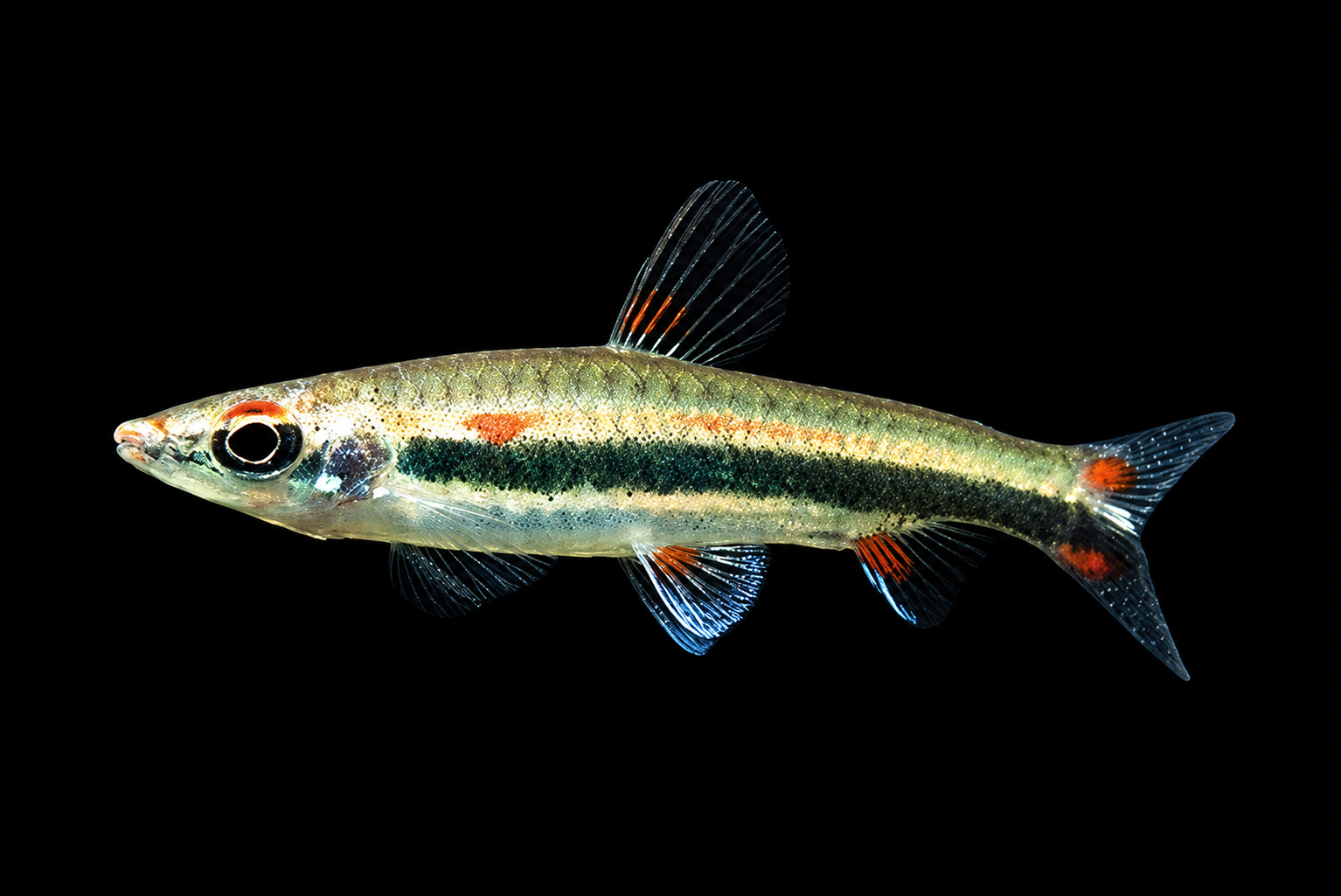
6. Pencilfish: Elegant, Slow and Easy to Outcompete
Pencilfish is the common name for fish in the genus Nannostomus. Different species have different colours and postures, and some rest at an angle in the water.
Their main issue is not aggression. It is speed.
They are slender, they do not swim quickly and they are not rough feeders. In a tank full of zebrafish, black skirt tetras or other fast feeders, pencilfish may avoid obvious injury but still fail to get enough food.
This is easy to miss because there may be no dramatic fight. The fish simply becomes thinner over time.
Tank mates I prefer
- peaceful bottom fish
- quiet small community fish
- cardinal tetras
- fish that do not rush and clear every feeding
- upper-level fish without constant chasing behaviour
Tank mates I would avoid
- very fast swimmers
- rough feeders
- fish with larger mouths
- tetras that chase constantly
- an aquarium already crowded with active species
Pencilfish suit a quieter aquarium. They do not suit the beginner idea that more movement always makes a tank better.
Keeping them means watching feeding for a little longer and confirming that they actually ate. Seeing the food disappear does not mean every fish received a share.
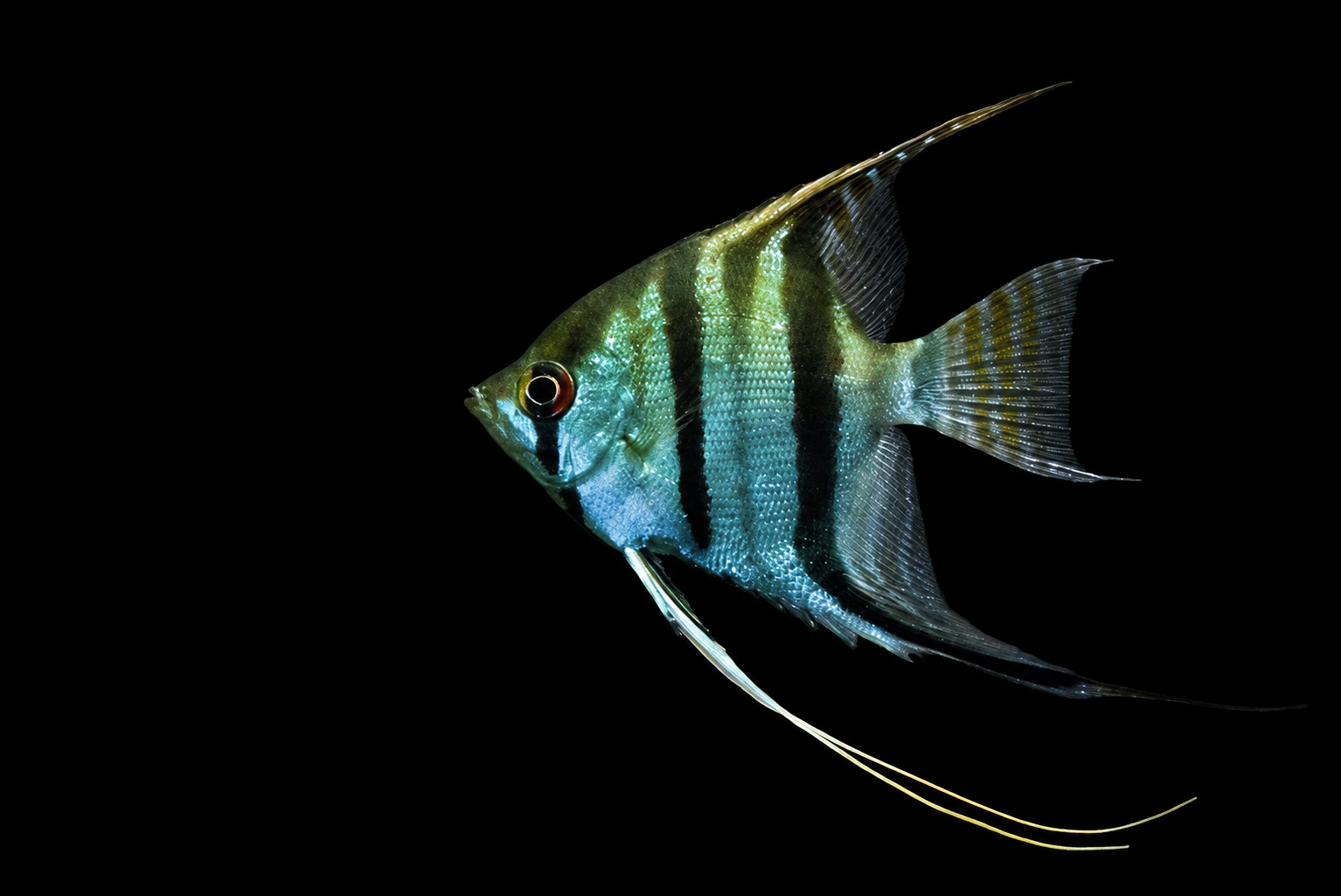
7. Freshwater Angelfish: Graceful, but Still a Cichlid
The freshwater angelfish is Pterophyllum scalare.
Its slow movement and long fins make it look gentle, so it is often treated as safe with every small tetra.
I would not recommend it that way.
An angelfish is still a cichlid. As it matures, its body, mouth and territorial behaviour become more important. Angelfish may fight with their own kind, and fish small enough to fit into the mouth may become food.
Tank mates I would not recommend first
- cardinal tetras
- pencilfish
- very small tetras
- guppies
- long-finned bettas
- slow small fish without hiding space
More sensible tank mate direction
- medium fish too large to swallow
- fish that are not rough but are also not extremely delicate
- mid-level fish with enough swimming ability
- bottom fish that suit the same temperature and water conditions
The original material suggests adding more angelfish to spread aggression. I would not give that advice to a beginner without context.
Group size, pairing, aquarium length, aquarium height and visual barriers all affect the result. In a tank that is already too small, adding more fish creates more pressure rather than solving it.
Freshwater angelfish can be the main fish in a community tank, but the entire plan should be based on its adult size. Do not use the calm behaviour of a juvenile in the shop as a permanent promise.
Which Combinations Make More Sense?
Beginner combinations I am more comfortable with
Harlequin Rasbora + Cardinal Tetra + Peaceful Bottom Fish
The two mid-level groups are relatively peaceful and close enough in size.
Each species still needs a proper group. Do not buy two or three of everything and fill the tank with random varieties.
Harlequin Rasbora + Rummy-Nose Tetra
Both can provide an attractive schooling display, and their activity levels are reasonably compatible.
The aquarium still needs enough length and suitable filtration. Two groups squeezed into a short tank will not look like the photos.
Pencilfish + Cardinal Tetra + Quiet Bottom Fish
This is a calmer direction.
Watch feeding closely to make sure the pencilfish eat, and avoid tank mates that rush through every meal.
Combinations that may work but need observation
Black Skirt Tetra + Harlequin Rasbora
Their size and activity can be compatible, but persistent chasing or fin nipping from the black skirt tetras means the group, space or combination needs to change.
Emperor Tetra + Similar-Sized Active Schooling Fish
This can work, but I would not add long-finned, slow or very delicate fish.
Combinations I would not recommend to a beginner
- freshwater angelfish + cardinal tetra
- freshwater angelfish + pencilfish
- emperor tetra + guppy
- emperor tetra + long-finned betta
- black skirt tetra + slow long-finned fish
- pencilfish + fast rough feeders
- any large-mouthed fish + slender small tetra
These Signs Mean It Is More Than an Adjustment Period
Brief hiding after a new fish enters the aquarium can be normal.
These signs should not be ignored:
- the same fish is chased every day
- new damage keeps appearing on the fins
- one group stays in a corner
- a fish gets no food during feeding
- a fish becomes noticeably thinner
- fins remain clamped
- breathing becomes faster
- a fish only comes out after the lights are off
- one fish controls the mid-level area or feeding zone
One short chase does not automatically mean the setup has failed.
But when the same fish always chases and the same fish always runs, that is not schooling and it is not play. It is ongoing pressure.
My Conclusion
Mid-level fish are not automatically compatible with one another.
A stable community tank usually does not have the most species. It has fish with reasonably compatible body size, swimming speed and feeding behaviour.
Among these seven groups:
- for the easiest plan, I would choose harlequin rasboras
- for a strong schooling display, I would choose rummy-nose tetras
- for a quiet, elegant setup, I would choose pencilfish, but not with fast fish
- with black skirt tetras or emperor tetras, I would avoid slow fish with large fins
- with freshwater angelfish, I would plan around the adult fish instead of the peaceful juvenile
Conflict does not always end with a dead fish.
More often, one fish keeps missing meals, keeps hiding and slowly loses colour while the owner thinks everything is fine because there is no dramatic fight.
Good compatibility does not mean that every fish is still alive. It means every group is willing to come out, swim and eat.
FAQ
Can harlequin rasboras live with cardinal tetras?
This is usually a reasonable direction. Both are peaceful and similar enough in size, but each species should have a proper group and enough swimming space.
Do black skirt tetras nip other fish?
They can, especially when the group is too small, the aquarium is cramped or slow long-finned fish are present. It does not happen in every group, but the risk should not be ignored.
Can emperor tetras live with guppies?
I would not recommend it first. Male guppies have large fins and are not especially fast, so they may become targets for chasing or fin nipping.
Can rummy-nose tetras live with angelfish?
A juvenile angelfish may look peaceful, but its mouth and body grow. The slender rummy-nose tetra may still be eaten by an adult angelfish.
Why are pencilfish a poor match for zebrafish?
Pencilfish swim and feed slowly. Zebrafish are highly active and reach food quickly. Even without obvious fighting, the pencilfish may lose every feeding race.
Is a freshwater angelfish a peaceful fish?
It should not be described that simply. It is a cichlid, may become territorial and may eat fish small enough to fit into its mouth.
Can I keep only two or three of each schooling fish?
Usually not. Reducing the number of species and keeping the main schooling fish in a proper group is normally better than buying many species in pairs.
Why do mid-level fish still fight?
Their swimming routes and feeding zones overlap. Poor matches in body size, speed, group size, territorial behaviour and aquarium space can create conflict even when both species are called mid-level fish.
Related Buying Guides
Altum Angelfish Care in Malaysia: Tank Height, Water & Feeding
A Malaysia-focused Altum Angelfish guide covering true Altum identification, tall tank planning, soft acidic water, feeding, groups, tankmates and buying checks.
Read Guide → GuidesCommon Angelfish vs Altum Angelfish: What’s the Difference?
Compare common freshwater angelfish and true Altum by species, body shape, forehead, tank height, water, feeding and suitability for Malaysian fishkeepers.
Read Guide →Disclaimer & Guidance Notes:
The specifications, wattages, dimension figures, and platform availability of items mentioned in our guides are based on manufacturer specifications, online store datasheets, and local marketplace data at the time of publication. While we strive to verify all information for reliability, aquarium equipment can vary depending on manufacturer batch updates or specific marketplace suppliers. Ensure you consult with verified sellers or professional fish-keepers prior to configuring heaters, large canister filters, or specialized lighting systems.