Best Aquarium Test Kit Malaysia: What Beginners Actually Need to Test
A Malaysia-focused beginner guide to aquarium test kits, including liquid master kits, budget liquid tests, quick test strips, and saltwater test kits for fish tanks.
Use this guide to compare tank suitability, seller-stated details, common buyer feedback, and practical limitations before choosing aquarium gear. Specs and availability can change, so confirm details on the seller page before buying.
Affiliate Disclosure Notice:
Some pages may include affiliate links. Product notes are based on visible marketplace listings, seller-stated information, and practical aquarium use cases available at the time of research.
Guide section
Buying Guides
Buying guides for aquarium water test kits and basic water quality checking tools for beginners.
If you are setting up a new aquarium in Malaysia, an aquarium test kit is not a fancy extra. It is the tool that tells you whether the water is actually safe, not just clear.
Clear water can still contain ammonia or nitrite. A fish can look fine in the morning and start gasping later if the tank is not cycled properly. This is why I would rather see a beginner buy a proper test kit before buying more fish, extra medicine, or random water treatment bottles.
This guide is not a lab ranking. The product notes below are based on visible Shopee Malaysia listings, seller-stated details, product screenshots, and practical aquarium use cases. Always confirm the current details on the seller page before buying.
My short take: For most freshwater beginners, a liquid kit that tests ammonia, nitrite, nitrate, and pH is the safest starting point. Test strips are convenient, but I would not rely on strips alone when cycling a new tank or investigating fish deaths.
Quick answer: which aquarium test kit should you buy?
| Situation | Better starting point | Why |
|---|---|---|
| New freshwater tank cycling | API Freshwater Master Test Kit | It covers ammonia, nitrite, nitrate, and pH, which are the core cycling checks. |
| Beginner wants a cheaper liquid option | Water Quality 4 in 1 Liquid Test Kit | It checks ammonia, nitrite, pH, and chlorine, but it does not include nitrate. |
| Quick routine checks | 7 in 1 Aquarium Test Strips | Fast and simple for pH, hardness, chlorine, nitrite, and nitrate checks. |
| Saltwater starter tank | API Saltwater Master Test Kit | Better suited to marine pH range plus ammonia, nitrite, and nitrate. |
| Reef tank with corals | Start with saltwater kit, then add reef-specific tests | Reef keepers usually still need alkalinity, calcium, magnesium, and phosphate tests. |
If you only keep one simple freshwater tank, start with ammonia, nitrite, nitrate, and pH. If your budget is tight, buy ammonia and nitrite testing first. If you are cycling a tank, do not depend on pH-only tools.
What matters most when choosing an aquarium test kit?
1. Ammonia and nitrite matter more than a perfect pH number
New fishkeepers often worry about pH first. pH matters, but ammonia and nitrite are the emergency tests.
Ammonia comes from fish waste, leftover food, dead plants, dead fish, and an immature filter. Nitrite appears during the cycling process. Both should be treated as zero-tolerance readings in a normal fish tank.
For a beginner, a test kit without ammonia is incomplete for cycling and fish-death troubleshooting.
2. Nitrate tells you when maintenance is catching up with you
Nitrate is less immediately dangerous than ammonia or nitrite, but it is still useful. Rising nitrate usually means the tank is accumulating waste and needs better water-change discipline, lighter feeding, more plant growth, or lower stocking.
This is why a full freshwater master kit is more useful than a very cheap partial kit.
3. Test strips are useful, but they are not my main crisis tool
Strips are fast. Dip, wait, compare the colour. For a quick check, they are convenient.
The weakness is that strips can be affected by storage, moisture, expiry, lighting, and colour reading. Many strip kits also skip ammonia. I would use strips as a routine screening tool, not as the only tool when fish are dying or a new tank is cycling.
4. pH and KH are about stability, not chasing one magic number
Most beginner community fish can tolerate a reasonable pH range if the water is stable. What I would avoid is constantly adjusting pH with chemicals because a forum or video says one number is perfect.
KH, or carbonate hardness, helps stabilise pH. If KH is too low, pH can swing more easily. That matters more than chasing tiny pH changes every day.
5. Freshwater and saltwater kits are not always interchangeable
Freshwater, saltwater, and reef aquariums do not have the same testing priorities.
A freshwater beginner usually starts with pH, ammonia, nitrite, and nitrate. A marine fish-only tank also needs ammonia, nitrite, nitrate, and a saltwater pH range. A reef tank goes further because corals depend on alkalinity, calcium, magnesium, phosphate, and other stability markers.
Product candidates checked during research
The products below were selected from user-supplied Shopee Malaysia research and visible seller-stated details. They are practical candidates, not laboratory-tested winners.
Ratings, prices, sold counts, expiry dates, stock, and seller options can change. This guide avoids treating marketplace numbers as permanent facts.
API Freshwater Master Test Kit
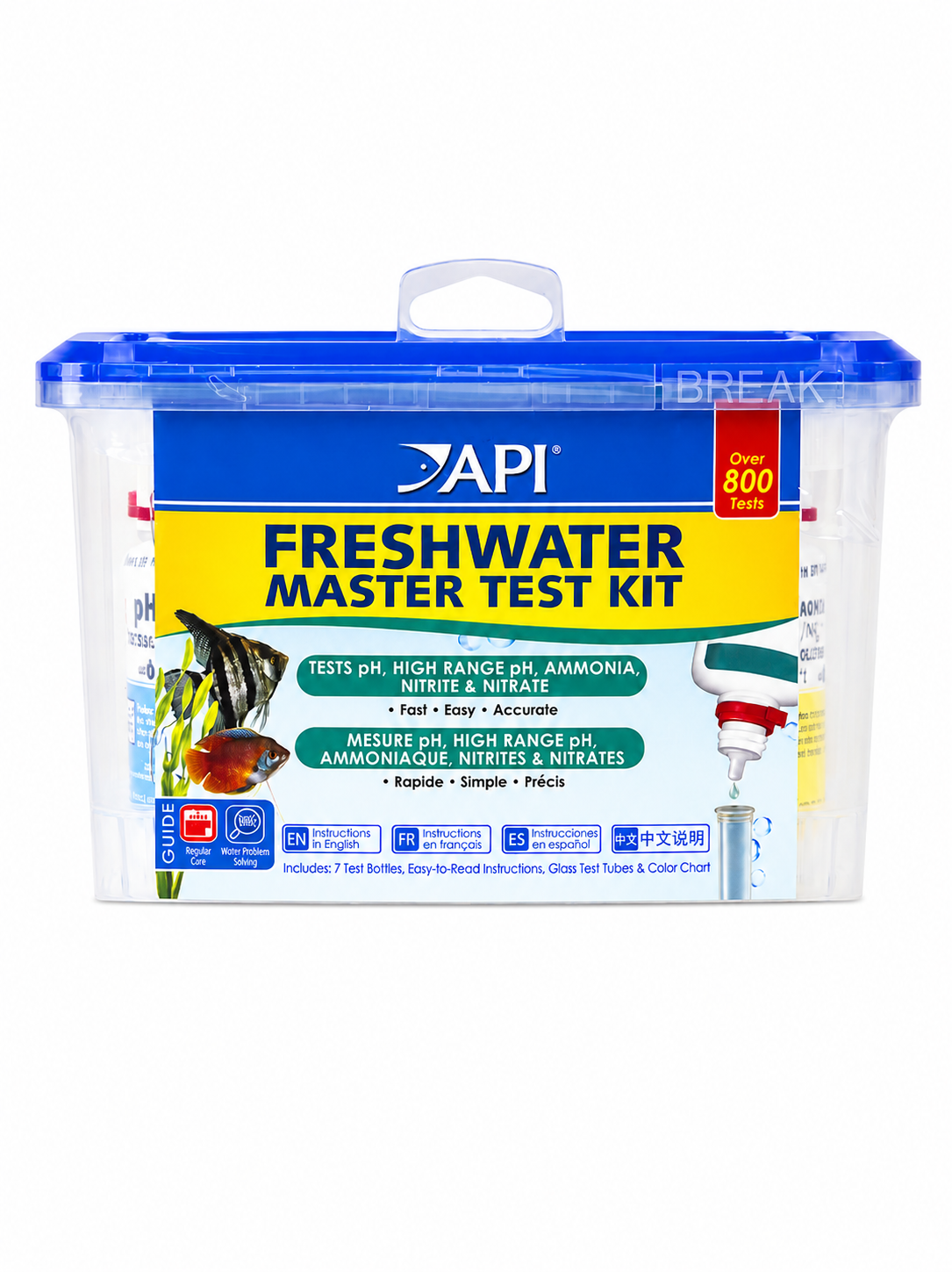
Freshwater beginners who want one serious kit for cycling, fish deaths, cloudy water, and regular checks
Buyers who only want the cheapest quick check, or people who do not want to do liquid reagent tests
Why Chose It / Why This Fits Your Tank
API Freshwater Master Test Kit is the strongest overall pick for most Malaysia freshwater beginners because it covers the readings that actually decide whether a tank is safe: pH, ammonia, nitrite, and nitrate.
It costs more than a strip bottle or a small budget kit, but it also avoids the biggest beginner mistake: only checking pH while missing ammonia and nitrite.
📋 Key specs and seller-stated details
✨ Why picked
This is the kit I would point a serious beginner to first. If a tank is cycling, you need to see ammonia and nitrite move toward zero. If fish are dying, you need to know whether ammonia or nitrite is involved. If water looks clear but the tank still feels unstable, nitrate and pH help complete the picture.
It is not the cheapest choice, but it is more complete than buying random single tests one by one.
✨ Common buyer complaints or watch-outs
Liquid tests take more effort than strips. You need to follow the instructions, count drops properly, shake bottles where required, wait for the colour to develop, and read the colour chart under decent lighting.
Also check the expiry date and seller stock before buying. Old reagents can give questionable readings.
✨ My aquarium note
For a new freshwater tank, this is the cleanest recommendation. I would rather a beginner buy this once than keep guessing with clear water, anti-chlorine, and fish medicine. It does not fix water quality by itself, but it tells you what is actually happening.
✨ Last checked
Seller-stated details and visible listing information were reviewed in July 2026. Marketplace price, stock, seller options, rating, sold count, and expiry date can change.
Water Quality 4 in 1 Liquid Test Kit
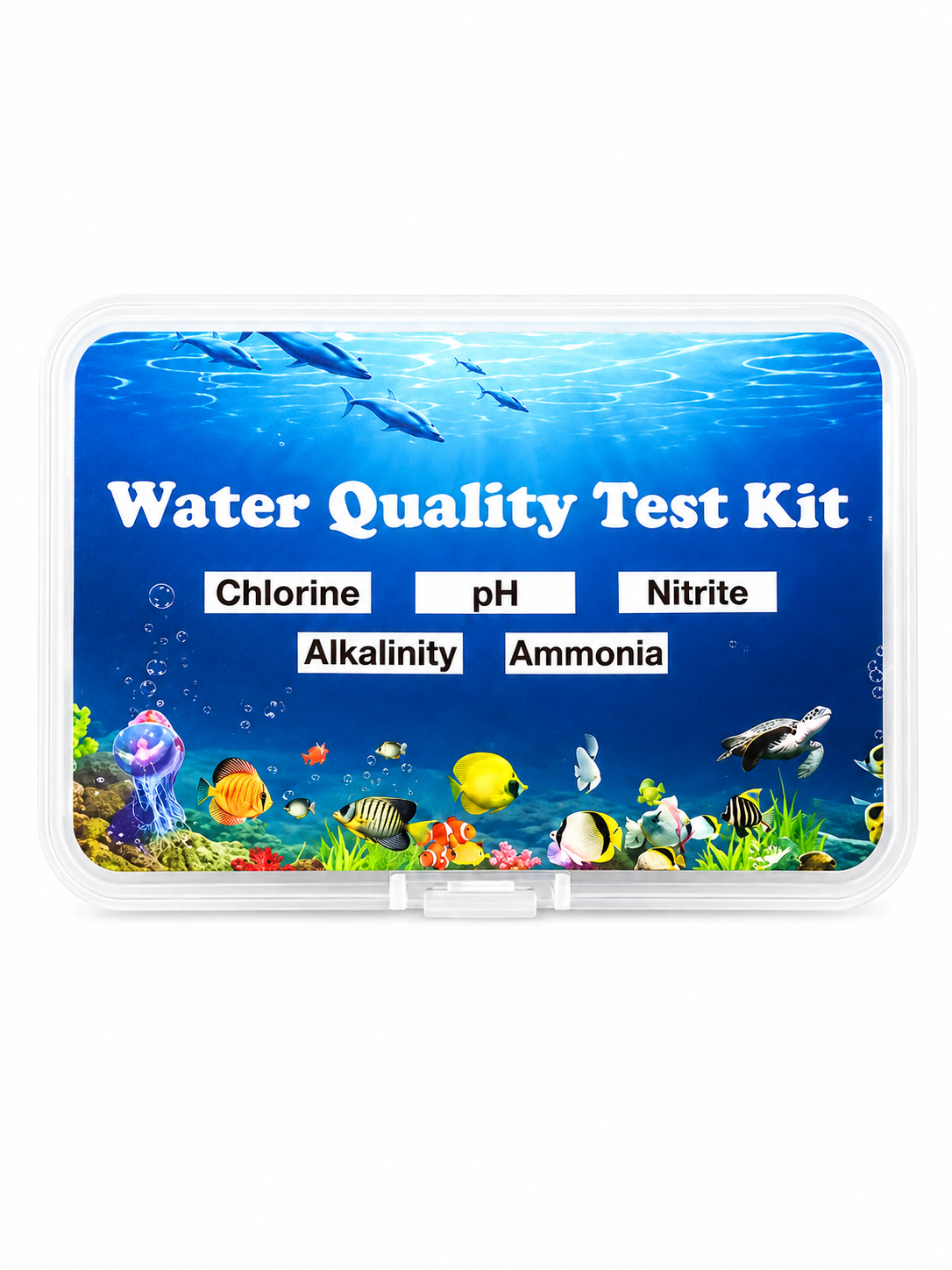
Budget buyers who want basic liquid checks for ammonia, nitrite, pH, and chlorine
Complete cycling tracking, planted-tank nutrient monitoring, or buyers who need nitrate, GH, and KH readings
Why Chose It / Why This Fits Your Tank
This 4 in 1 liquid kit is a cheaper way to test several important water issues without jumping straight to a full master kit. The strongest point is that it includes ammonia and nitrite, which are more important for emergencies than pH alone.
The weakness is that it does not include nitrate. That makes it less complete for tracking a full nitrogen cycle or long-term water quality.
📋 Key specs and seller-stated details
✨ Why picked
It gives budget beginners access to ammonia and nitrite readings. That already makes it more useful than many pH-only tools. Chlorine testing can also be helpful when checking tap-water treatment habits.
✨ Common buyer complaints or watch-outs
It is not a complete master kit. Nitrate is missing, so you still cannot fully track the later stage of cycling or maintenance build-up. GH and KH are also missing, so it is not enough for hardness or pH stability checks.
The brand and long-term reagent consistency are also less established than API, Sera, JBL, or similar aquarium brands. Treat it as a budget diagnostic tool, not a professional benchmark.
✨ My aquarium note
If the budget is tight, this is better than guessing. But I would not call it the best overall kit because nitrate is missing. It makes sense for beginners who want a cheap ammonia and nitrite check, especially after fish death, new-tank problems, or suspicious water changes.
✨ Last checked
Seller-stated details and visible listing information were reviewed in July 2026. Marketplace price, stock, rating, sold count, and available variants can change.
7 in 1 Aquarium Test Strips
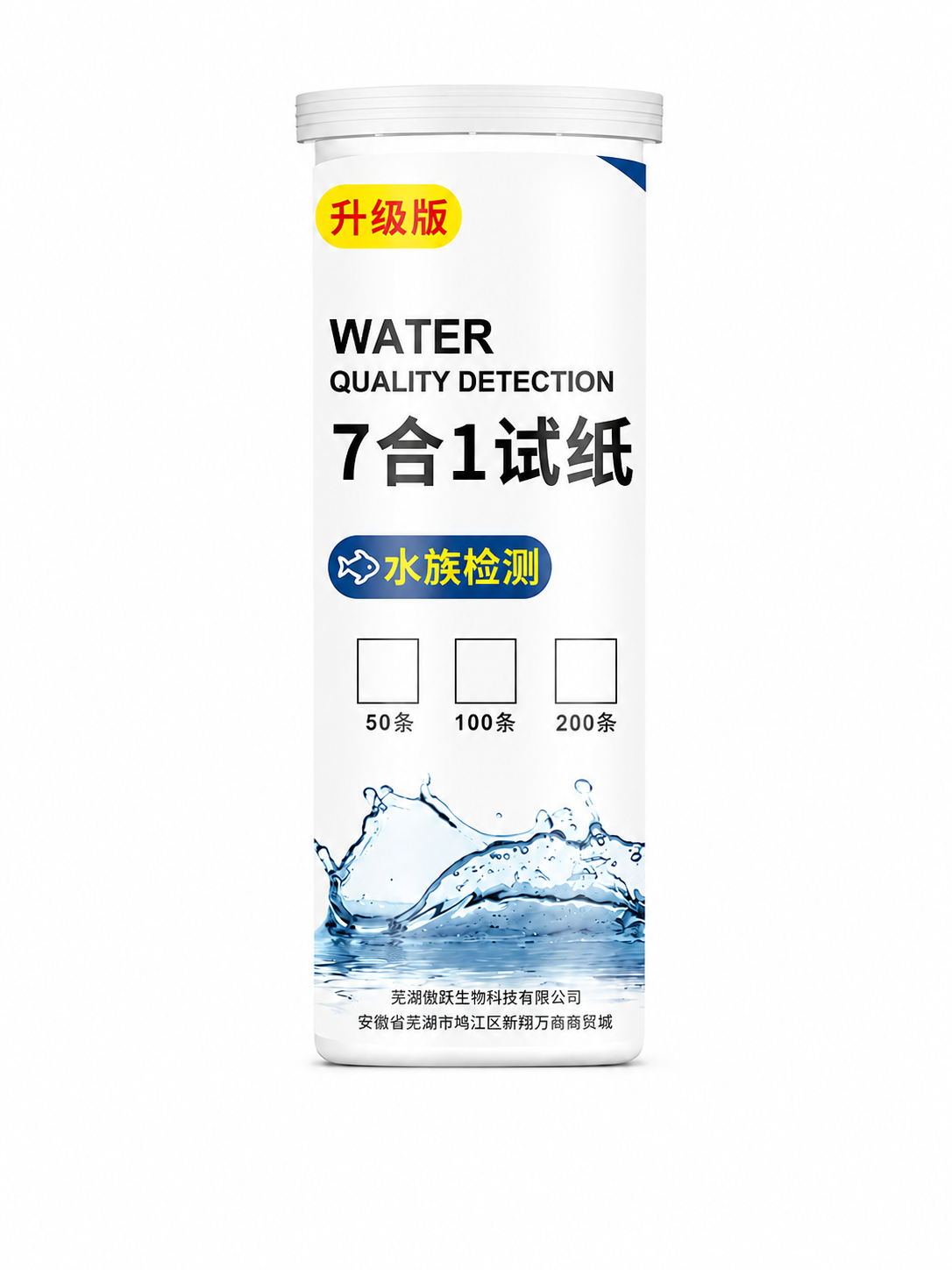
Fast routine checks when you want a quick look at pH, hardness, chlorine, nitrite, and nitrate
New tank cycling as the only kit, fish-death investigation, or any situation where ammonia must be checked
Why Chose It / Why This Fits Your Tank
The 7 in 1 test strips are the easiest option here. Dip the strip, wait, then compare the colour blocks. For casual monitoring, that convenience is the main advantage.
The important limitation is ammonia. Based on the seller-stated information provided, this strip option does not clearly cover ammonia. That means it should not be the only test kit for cycling a new tank.
📋 Key specs and seller-stated details
✨ Why picked
This is the easiest product to use. It suits people who want a quick habit check after water changes or during normal maintenance. GH and KH can also be useful if you are trying to understand pH stability.
✨ Common buyer complaints or watch-outs
The listing shown had no ratings and no sold count at the time of user research, so buyer feedback was limited. Test strips can also lose reliability if exposed to moisture, heat, or poor storage.
Most importantly, it is not an ammonia test. If fish are gasping, dying, or a tank is still cycling, use an ammonia-capable liquid kit.
✨ My aquarium note
I like strips as a quick screening tool, not as the only tool. Keep them dry, close the bottle immediately, and do not read the colour too late. If a strip shows a suspicious result, confirm with a liquid test before making big changes.
✨ Last checked
Seller-stated details and visible listing information were reviewed in July 2026. Marketplace price, stock, rating, sold count, and packaging options can change.
API Saltwater Master Test Kit
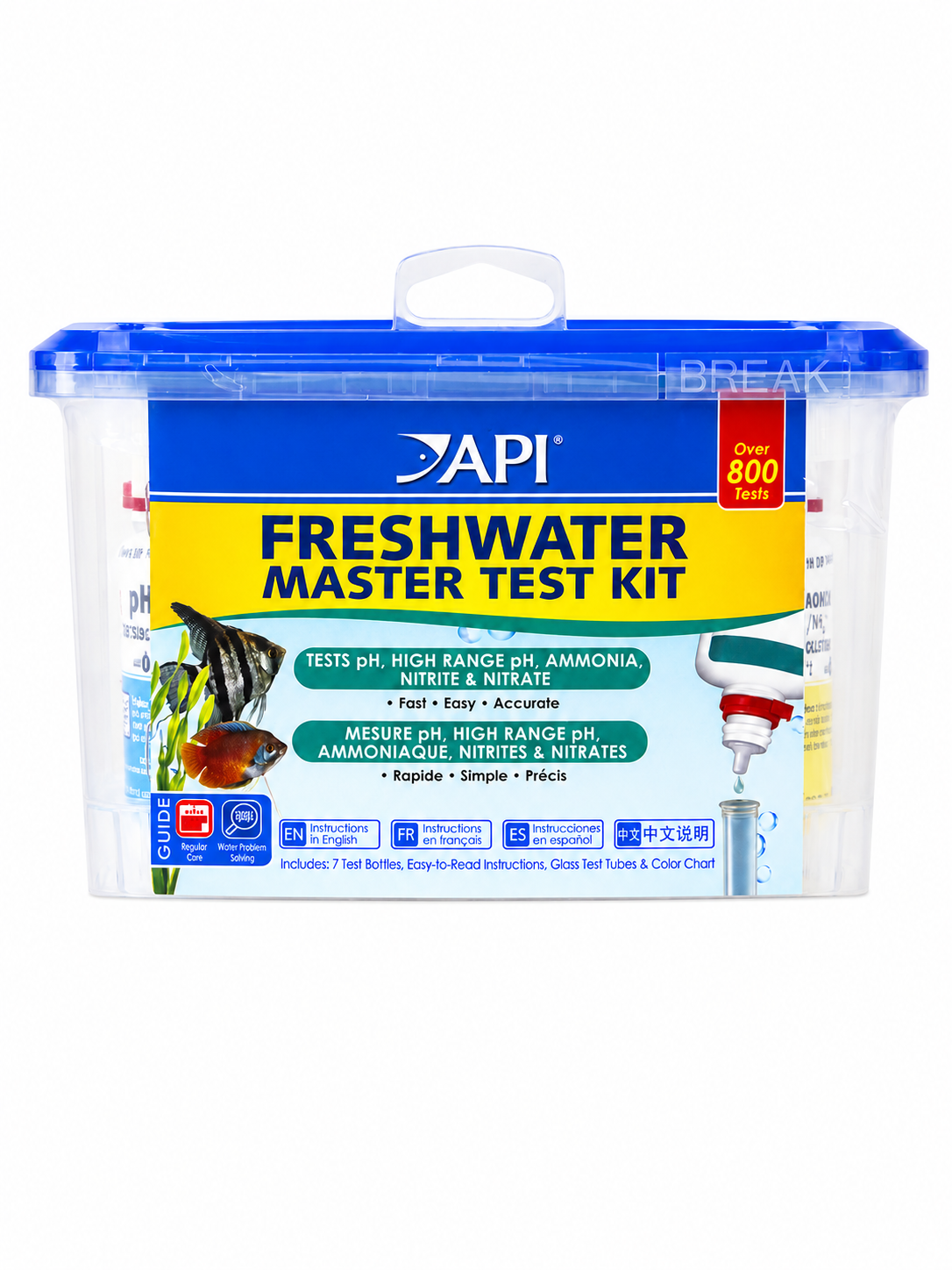
Marine fish-only tanks, FOWLR tanks, and saltwater beginners who need basic cycling and monitoring tests
Full reef-keeping by itself, because reef tanks usually need alkalinity, calcium, magnesium, and phosphate tests too
Why Chose It / Why This Fits Your Tank
API Saltwater Master Test Kit is the saltwater version to consider if you are setting up a marine aquarium. It checks saltwater-range pH plus ammonia, nitrite, and nitrate.
For marine fish-only tanks, that covers the core cycling and waste monitoring needs. For reef tanks with corals, it is only the starting point.
📋 Key specs and seller-stated details
✨ Why picked
Saltwater tanks are less forgiving than simple freshwater tanks. If the tank is cycling, ammonia and nitrite still matter. If nutrients climb, nitrate becomes part of the maintenance picture. This kit gives marine beginners the basic numbers before they start guessing.
✨ Common buyer complaints or watch-outs
Do not assume this replaces reef-specific testing. Corals add another layer. Alkalinity, calcium, magnesium, phosphate, and sometimes other tests become important when coral growth and stability matter.
Also make sure you are selecting the saltwater option, not the freshwater option, on the seller page.
✨ My aquarium note
For a fish-only saltwater tank, this is a sensible starter kit. For reef, I would still add separate alkalinity and phosphate testing early. Once corals enter the picture, basic cycling tests are not enough.
✨ Last checked
Seller-stated details and visible listing information were reviewed in July 2026. Marketplace price, stock, seller options, rating, sold count, and expiry date can change.
Beginner buying notes: what I would avoid
Do not buy a pH-only tool and think the tank is safe
A pH meter or pH drop test can be useful, but pH alone does not tell you whether ammonia or nitrite is present. A tank can have acceptable pH and still be unsafe.
Do not rely on test strips during a serious problem
If a fish dies suddenly, fish are breathing fast, or a new tank is cloudy, confirm ammonia and nitrite with liquid tests. Strips are convenient, but I would not make emergency decisions from strips alone.
Do not chase perfect numbers for every fish
Most beginner community fish do better with stable water than constant pH adjustments. Learn your tap water, use conditioner properly, cycle the tank, and avoid overstocking. That usually matters more than forcing pH to match an internet chart.
Do not forget expiry and storage
Test kits are chemical tools. Keep bottles closed, store strips dry, avoid heat, and check expiry dates. A cheap kit that has gone bad can be worse than no kit because it gives false confidence.
What should you test and when?
| Tank situation | What to test first | How often |
|---|---|---|
| New tank cycling | Ammonia, nitrite, nitrate, pH | Every few days, or more often if fish are already inside |
| Fish suddenly die | Ammonia, nitrite, pH, temperature | Immediately |
| Cloudy water | Ammonia, nitrite, nitrate | Immediately, then repeat after water changes |
| Regular freshwater tank | Nitrate and pH, with ammonia/nitrite checks if fish look stressed | Weekly or every few weeks depending on stability |
| After filter media change | Ammonia and nitrite | For several days after the change |
| Saltwater fish-only tank | pH, ammonia, nitrite, nitrate | Weekly at first, then based on stability |
| Reef tank | Alkalinity, nitrate, phosphate, calcium, magnesium | Weekly or according to coral demand |
FAQ
Do beginners really need an aquarium test kit?
Yes, especially during setup. Without testing, you are guessing whether the tank is cycled. A beginner does not need every advanced test on day one, but ammonia, nitrite, nitrate, and pH are worth having.
Are aquarium test strips accurate enough?
They are useful for quick checks, but I would not use them as the only tool for cycling or emergency troubleshooting. Liquid kits are better when you need more confidence.
What should ammonia and nitrite be in a fish tank?
For a normal aquarium, both should be 0 ppm. Any detectable ammonia or nitrite is a warning sign, especially in a new or heavily stocked tank.
Is nitrate dangerous?
Nitrate is less immediately toxic than ammonia or nitrite, but high nitrate shows that waste is building up. Regular water changes, careful feeding, and lower stocking help control it.
Can I use the same test kit for freshwater and saltwater?
Not always. Some tests can be used across both, but pH ranges and marine needs differ. Saltwater and reef tanks should use kits designed for marine water where relevant.
Should I test Malaysian tap water?
It is useful to test tap water occasionally, especially pH, chlorine, and hardness. But tap water testing does not replace aquarium testing because fish waste and feeding change the water inside the tank.
Final recommendation
For a serious freshwater beginner, I would start with the API Freshwater Master Test Kit if the budget allows. It covers the readings that matter most for cycling and common fish tank problems.
If the budget is tight, the 4 in 1 liquid kit is still more useful than guessing because it covers ammonia and nitrite, but remember it does not include nitrate.
For quick routine checks, the 7 in 1 strips are convenient, but they should support a better kit rather than replace it.
For saltwater tanks, use a saltwater-specific kit. If you plan to keep corals, budget for reef-specific tests too.
Disclaimer
Product prices, stock, seller details, expiry dates, packaging, test counts, and specifications can change. Always check the current Shopee seller page before buying. This page contains affiliate links, which may earn Akuarium.my a commission if you buy through them, without increasing your price.
Last Updated
2026-07-09
Reserved ad space. No third-party ads are currently loaded.
Related Buying Guides
Best Aquarium Water Conditioner Malaysia for Beginners
A beginner-friendly Malaysia buying guide comparing aquarium water conditioners, anti-chlorine products, and tap water treatments for freshwater fish tanks.
Read Guide → Food & WaterBetta Fish Food and Pellets in Malaysia
A practical beginner guide to feeding betta fish in Malaysia, including pellets, brine shrimp, bloodworms, daphnia, portion size, overfeeding signs, and food mistakes to avoid.
Read Guide →Disclaimer & Guidance Notes:
The specifications, wattages, dimension figures, and platform availability of items mentioned in our guides are based on manufacturer specifications, online store datasheets, and local marketplace data at the time of publication. While we strive to verify all information for reliability, aquarium equipment can vary depending on manufacturer batch updates or specific marketplace suppliers. Ensure you consult with verified sellers or professional fish-keepers prior to configuring heaters, large canister filters, or specialized lighting systems.