8 Betta Fish Diseases & Treatments: Early Signs You Should Not Ignore
Learn the early signs of betta fin rot, ich, velvet, cottony growth, bloating, dropsy and popeye, plus the safest checks to make before using medication.
Written by Eu C., a Malaysia-based aquarium hobbyist and editor of Akuarium.my.
Guide section
Freshwater Fish
Betta setup, tank size, filtration and feeding guides for beginner fishkeepers.
When a betta suddenly becomes quiet, develops damaged fins or starts showing spots, the natural reaction is to find medicine as quickly as possible.
That is not my preferred first step.
Many signs of betta disease also appear when the water contains ammonia or nitrite, the temperature drops, filter flow is too strong, the fish is overfed or a decoration causes injury. If the original stressor remains, medication alone may fail and can add more stress.
Quick answer: before treating a sick betta, check temperature, ammonia, nitrite, chlorine exposure, filter flow, feeding and the latest change in the aquarium. Perform a conditioned water change when water quality is questionable. Then match the full symptom pattern, not one sign, before selecting a treatment specifically labelled for that condition.
This is an educational guide for first checks, not a substitute for veterinary diagnosis. Fish diseases can look similar without microscopy or professional examination. Seek help from an aquatic veterinarian, fish-health professional or genuinely experienced aquarium shop when the fish deteriorates quickly, cannot breathe or swim properly, develops bleeding lesions, or several fish become sick together.
For the daily routine that prevents many problems, read the Malaysia betta fish care guide.
First checks before thinking about medication
| Check | What I want to know |
|---|---|
| Temperature | Is the water stable, especially in an air-conditioned room? |
| Ammonia and nitrite | Both should be undetectable in a stable aquarium |
| Nitrate and maintenance | Has waste accumulated or has maintenance been delayed? |
| Water conditioner | Was all new tap water properly treated? |
| Filter flow | Is the fish fighting the current or unable to rest? |
| Feeding | Was the betta recently overfed or becoming swollen? |
| Recent changes | New fish, new decor, filter cleaning, salt, medication or a large water change? |
| Speed of progression | Has the problem changed slowly over days or rapidly within hours? |
The Malaysia aquarium test-kit guide explains which parameters a beginner actually needs to measure.
A safer action plan
- Take a photo or video before making changes.
- Write down when the signs began and what changed in the tank.
- Test the water and check temperature.
- If ammonia, nitrite or chlorine is suspected, perform a controlled large water change with conditioned, temperature-matched water.
- Increase aeration when the fish is breathing rapidly.
- Pause feeding briefly only when overfeeding or water pollution is a concern.
- Isolate the fish when the problem may be contagious, tank mates are interfering, or the medication is unsuitable for the display aquarium.
- Choose one treatment that matches the most likely diagnosis and follow the real product label.
- Do not combine salt, copper, antibiotics, methylene blue and other medicines without a clear reason.
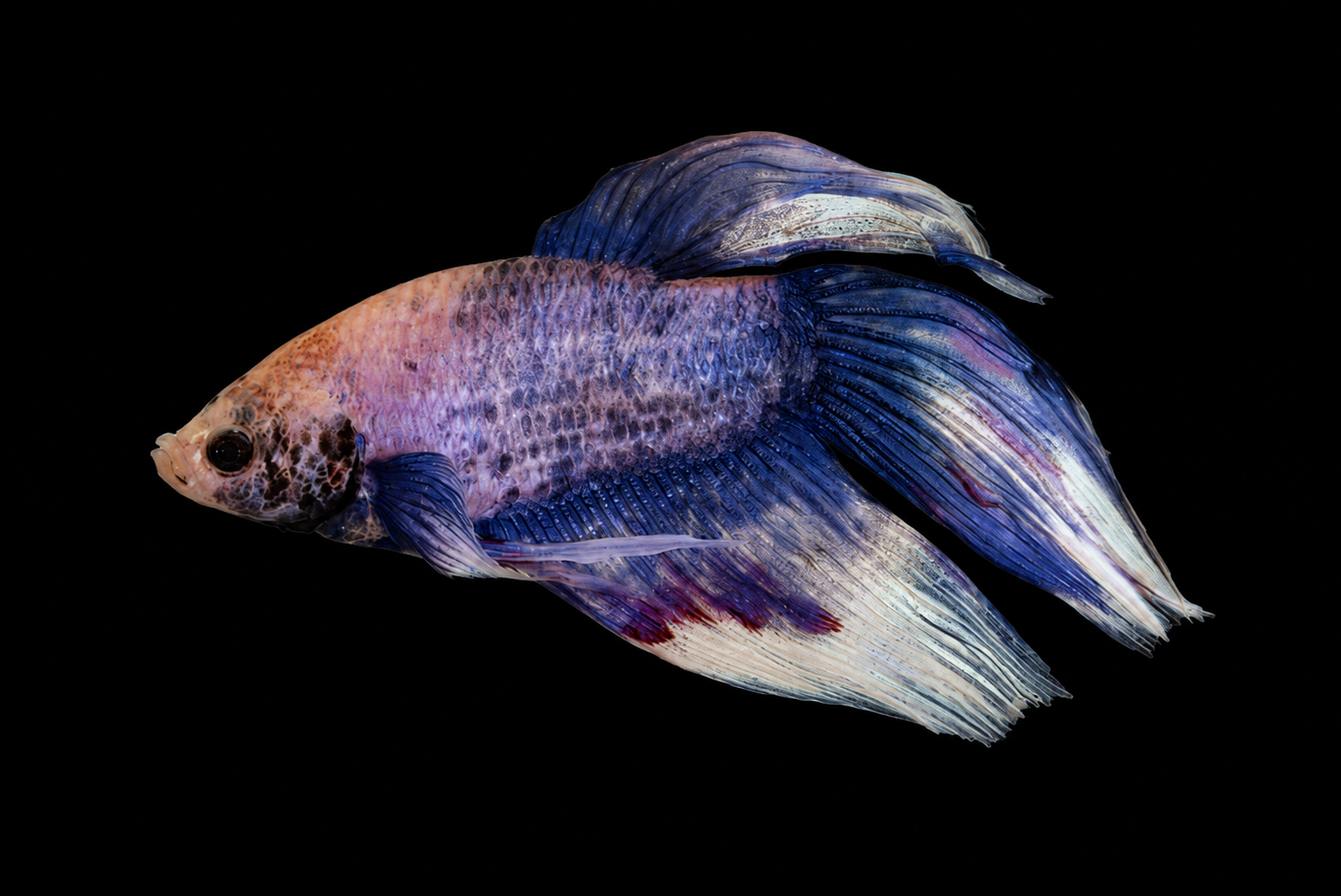
1. Water-Quality Poisoning: Gasping, Weakness or Sudden Bottom Sitting
This is not an infectious disease, but it belongs first because its signs are often mistaken for infection.
Possible signs include:
- very rapid breathing;
- frequent trips to the surface;
- red or irritated-looking gills;
- lying on the bottom;
- unstable swimming;
- faded colour;
- clamped fins;
- several fish showing problems at the same time.
Check for:
- ammonia or nitrite;
- untreated tap water;
- a disrupted nitrogen cycle;
- filter media that was cleaned too aggressively;
- hidden dead fish or rotting food;
- a sudden temperature change;
- low oxygen.
What I would do
I would test the water first. If ammonia, nitrite or chlorine exposure is suspected, I would make a water change large enough to dilute it, use conditioner correctly, add aeration and reduce feeding until the water is stable.
I would not reach for antibiotics because antibiotics do not remove ammonia or chlorine.
For a new aquarium, also read how to cycle a new aquarium.
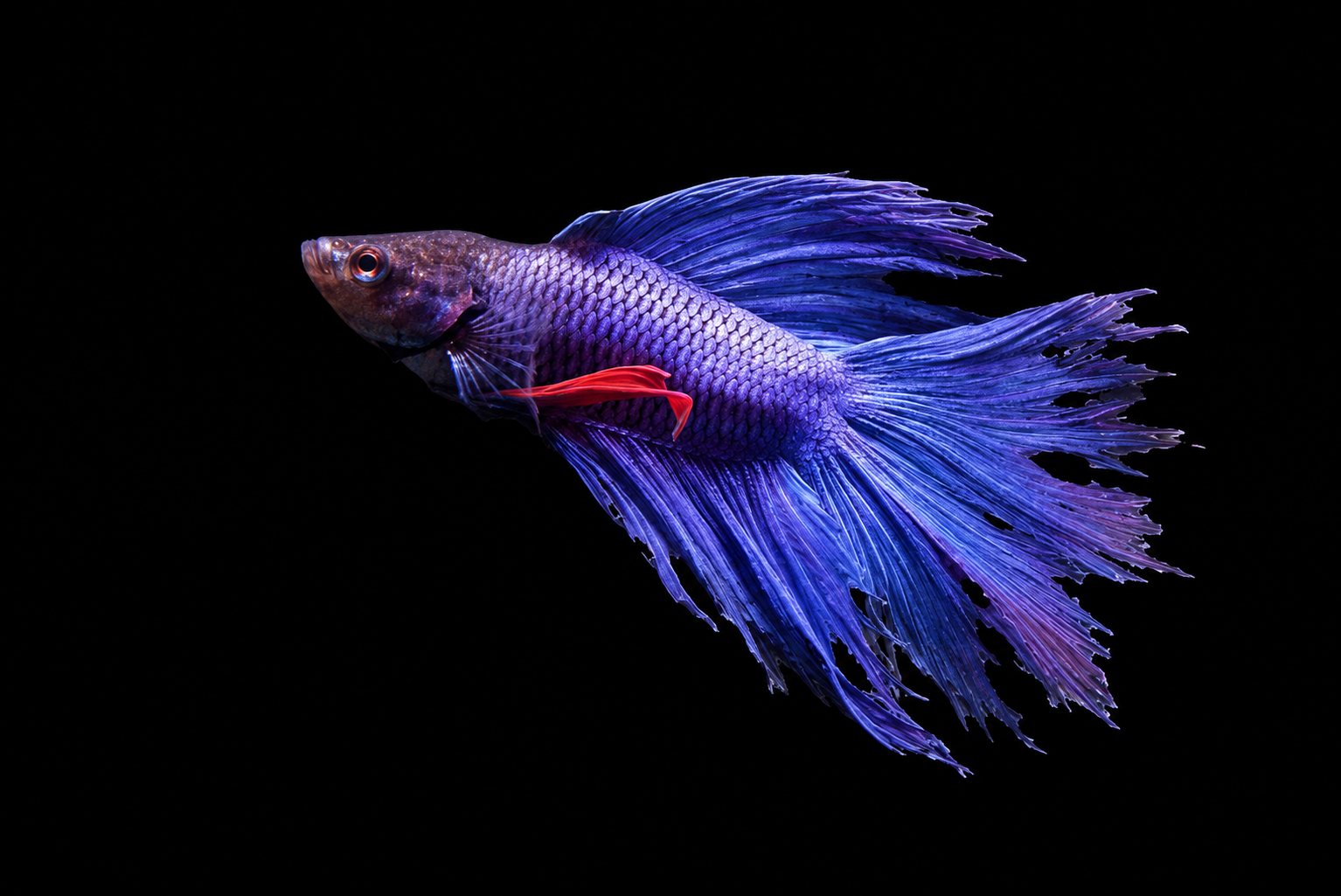
2. Fin Rot or a Physically Torn Fin?
Betta fins are easy to damage. They can snag on decor, be bitten by tank mates, get pulled against an intake or tear after repeated flaring.
Simple fin damage is more likely to:
- have one clear split or missing area;
- remain stable rather than receding every day;
- show no spreading red, black or white edge;
- begin growing back after the cause is removed and the water stays clean.
Fin rot becomes more likely when:
- the fin edge keeps receding;
- damage moves towards the body;
- the edge changes colour;
- inflammation, redness or sores appear;
- the betta becomes weaker or stops eating;
- a tear shows no healing progress.
Early treatment approach
- Check ammonia, nitrite and temperature.
- Remove sharp decor or reduce filter flow.
- Keep the aquarium clean without resetting the biological filter.
- Use a hospital tank when isolation is needed or treatment may harm plants and filtration.
- If the fin continues to recede after stressors are corrected, use an ornamental-fish medicine labelled for bacterial infection and follow its instructions.
I would not cut the fin or mix several antibiotics based on a guess.
Recovery does not mean a full tail grows back in two days. Look for the edge to stop receding, improved behaviour and a thin clear margin of new growth.
3. White Spot / Ich
Freshwater ich is a parasite that often looks like small grains of salt on the body and fins.
Signs that support ich include:
- many white dots of similar size;
- the number of dots increasing;
- rubbing or flashing against objects;
- clamped fins;
- reduced appetite;
- rapid breathing when the gills are involved.
One white mark is not enough for diagnosis. Mucus, injury, cysts and debris can also appear as white spots.
Treatment approach
Ich has life stages on the fish and in the aquarium environment. Treatment normally needs to cover the exposed tank rather than only making the visible dots disappear from one fish.
Use a medicine specifically labelled for freshwater ich and:
- follow the dosage on the actual product;
- complete the full treatment period;
- do not stop only because the spots disappear;
- remove carbon or chemical media only when the label instructs you to;
- increase aeration when medication or warmer water reduces oxygen.
I would not raise temperature aggressively without knowing the medication, oxygen level and actual diagnosis. Other infections can look similar and are not automatically safer in hotter water.
4. Velvet: Fine Gold Dust and Rapid Breathing
Velvet may look like very fine gold, yellow or rust-coloured dust. It can be easier to see with a light shone from the side in a dark room.
Watch for:
- a fine gold-dust coating;
- rubbing against objects;
- tightly clamped fins;
- refusing food;
- hiding;
- rapid breathing;
- dull or irritated skin.
Velvet can affect the gills before the body coating becomes obvious. Rapid breathing makes the situation more urgent.
Treatment approach
- Isolate the fish when practical without delaying treatment.
- Use an antiparasitic product specifically labelled for freshwater velvet.
- Follow label instructions for lighting, water changes, carbon and treatment length.
- Add aeration.
- Do not use copper blindly in a display tank with shrimp, snails or sensitive plants.
- Do not treat darkness alone as a complete cure.
5. Cottony Growth: Fungus or Bacterial Infection?
White cotton-like growth on the body, fins or wounds is commonly called fungus. However, cottony material around the mouth or gills can also be a fast-moving bacterial infection.
A secondary fungal or oomycete problem is more likely when:
- it grows on an existing wound or damaged scale;
- it looks fluffy or cotton-like;
- it appears after injury or prolonged poor water conditions.
A bacterial problem becomes more concerning when:
- the mouth looks white, grey or eroded;
- the lesion spreads quickly;
- pale patches appear on the head, back or gills;
- the fish breathes rapidly;
- fin erosion occurs at the same time;
- the condition changes over a short period.
Treatment approach
I would not assume every white growth is fungus.
My steps would be:
- Isolate the fish if the condition appears contagious or is spreading.
- Check water quality and temperature.
- Take clear photos to compare progression.
- Choose medication based on whether the pattern is more consistent with fungal/oomycete disease or bacterial infection.
- Seek help sooner when the mouth, gills or a large wound is involved.
Do not automatically raise temperature for every cottony lesion. Some bacterial infections can progress faster in warmer water.
6. Swollen Belly and Swim-Bladder Symptoms
A swollen abdomen is not one diagnosis.
Possible causes include:
- overfeeding;
- constipation;
- dry food swelling;
- a female carrying eggs;
- internal parasites;
- infection;
- enlarged organs;
- a cyst or tumour;
- early dropsy.
Swim bladder disease is also not one specific disease. A betta may float, sink, tilt or struggle with depth because of bloating, injury, infection or an internal-organ problem.
What I would check
- Did the problem start after a large feeding?
- Are the scales flat or beginning to lift?
- Is the fish still eating?
- Has the waste changed?
- Can the betta swim when it wants to?
- Is the water too cool?
- Are ammonia or nitrite present?
Early action
When overfeeding is very likely and the fish is otherwise stable, I would skip one feeding or use a short fast, then restart with smaller portions. Frozen daphnia may be used as food variety, but it is not a cure for every swollen abdomen.
I would not force-feed peas. Bettas are insect-eating, protein-focused fish and peas are not a universal treatment.
If the abdomen keeps enlarging, the fish weakens, scales begin to lift or buoyancy gets worse, treat it as more serious than simple constipation.
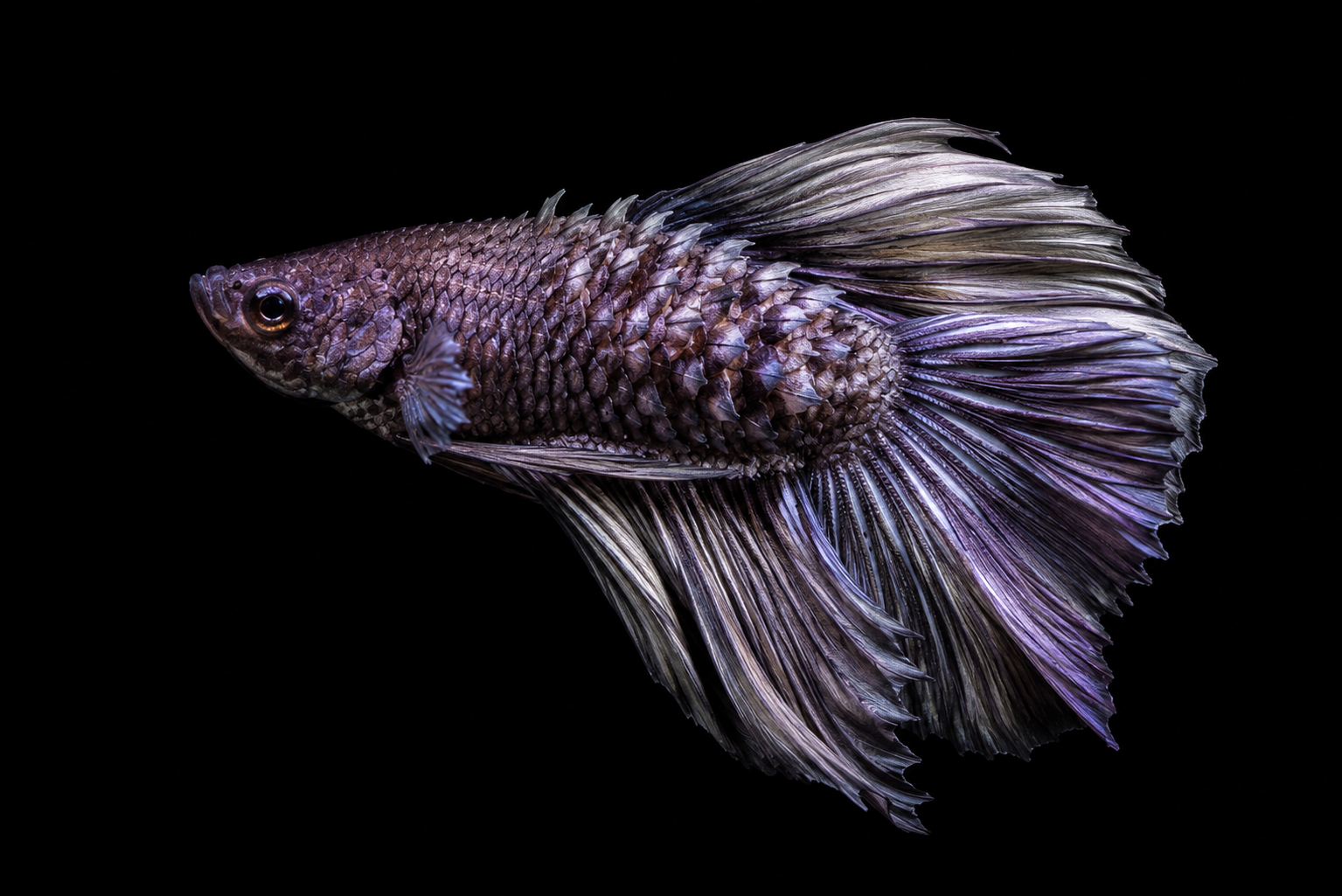
7. Dropsy and Pinecone Scales
Dropsy describes fluid accumulation in the body. It can be linked to organ damage, internal infection or another systemic problem.
Major signs include:
- body swelling;
- scales lifting when viewed from above;
- possible eye swelling;
- weakness;
- loss of appetite;
- swimming difficulty;
- changes in colour or breathing.
Pinecone scales are an emergency sign. The prognosis is often poor once they are obvious.
What I would do
- Isolate the fish in a quiet hospital tank.
- Keep the water clean, stable and well oxygenated.
- Check ammonia, nitrite and temperature.
- Reduce stress and handling.
- Seek qualified aquatic-health help when available.
- Use treatment only according to the most likely cause and the product label.
I would not promise that one salt or antibiotic treatment will cure dropsy because dropsy does not have one single cause.
8. Popeye, Swollen Eyes or Cloudy Eyes
Popeye means one or both eyes protrude or swell.
One affected eye may follow:
- impact with decor;
- fighting;
- net injury;
- a local wound.
Both eyes are more concerning for:
- water-quality problems;
- systemic infection;
- internal disease;
- prolonged environmental stress.
Early action
- Test the water.
- Check for sharp decor and aggressive tank mates.
- Watch whether swelling, bleeding or cloudiness is progressing.
- Isolate the fish when it is being disturbed or the condition worsens.
- Seek a more precise diagnosis when both eyes are affected or there is bloating, red streaking, ulcers or appetite loss.
Treatment depends on whether the cause is injury, water quality or infection. One medicine does not fit every case of popeye.
A Simple Hospital Tank
A hospital tank does not need to look attractive. It needs to be easy to observe and clean.
Use:
- a container or tank large enough for normal swimming and surface access;
- conditioned water;
- stable temperature;
- a lid;
- gentle aeration or a sponge filter where appropriate;
- a bare bottom;
- one smooth resting place;
- separate tools when the condition may be contagious.
Avoid:
- carbon when the medication label instructs its removal;
- porous decorations that absorb medicine;
- plants or snails when the treatment is unsafe for them;
- returning hospital-tank water to the display aquarium.
A hospital tank still needs water-quality control. Ammonia can rise quickly when the filter is not mature.
When Not to Wait
Seek faster help when:
- the fish cannot stay upright;
- breathing is extremely rapid;
- gills appear damaged or discoloured;
- the body is bleeding or has a large ulcer;
- scales are pineconing;
- mouth or gill lesions spread quickly;
- several fish become sick together;
- the condition worsens within hours;
- the fish fails to improve after water quality is corrected;
- you are unsure whether medications can be safely combined.
Common Treatment Mistakes
- diagnosing from one photograph;
- using antibiotics for parasites;
- using ich medicine for every white mark;
- combining several medicines at once;
- adding aquarium salt for every condition;
- increasing the dose to speed up recovery;
- stopping treatment as soon as external signs disappear;
- raising temperature without protecting oxygen levels;
- cleaning the entire filter while the fish is sick;
- using Indian almond leaf as a replacement for actual treatment.
Indian almond leaves can add tannins and make the environment feel more sheltered, but they do not remove ammonia, kill every parasite or replace the correct medication.
FAQ
How do I know whether my betta is sick or resting?
Bettas do rest on leaves, decor or the bottom. It becomes more concerning when bottom sitting continues with appetite loss, rapid breathing, clamped fins, faded colour or swimming difficulty.
Does a torn fin always mean fin rot?
No. Fins can tear on decorations, filter intakes, during flaring or because of tank mates. Fin rot is more likely when damage keeps receding, edges change colour and healing does not begin after the injury source is removed.
Does every white spot mean ich?
No. Ich usually creates multiple similar-sized spots that increase and may come with rubbing, clamped fins or breathing problems. One mark should be judged with the rest of the symptoms.
Can aquarium salt treat every betta disease?
No. Salt can help in selected situations, but it is not a universal medicine. It can also affect plants, snails and some tank mates. Use it only when appropriate and with correct instructions.
Should I raise the temperature when my betta is sick?
Not for every condition. Temperature should remain stable, but blindly increasing it can lower oxygen or speed up certain infections. Identify the likely problem first.
Why is my betta swollen and swimming sideways?
Possible causes include overfeeding, constipation, cool water, infection, organ disease or dropsy. Swim-bladder symptoms describe a buoyancy problem, not one specific diagnosis.
Can a betta recover after its scales start pineconing?
Pineconing is a serious sign commonly linked to dropsy and internal damage. Isolate the fish, stabilise the water and seek help quickly. No single medicine can be promised to work.
Is white cotton around a betta’s mouth always fungus?
No. Cotton-like mouth or gill lesions can be bacterial. Treat rapidly spreading lesions or rapid breathing as urgent.
When should I use a hospital tank?
Use one when the fish needs isolation, the condition may be contagious, tank mates interfere, or medication is unsafe for plants, snails or the biological filter in the display tank.
Which medicine should I buy for a sick betta?
The medicine depends on the cause. Check water quality and the full symptom pattern first, then choose a product labelled for the relevant bacterial, fungal or parasitic condition. Follow the real label and do not mix products without guidance.
Conclusion
When a betta looks sick, I would not begin with the question, “What is the strongest medicine?”
I would begin with:
- What changed?
- What does the water test show?
- Is this a symptom, an injury or a contagious disease?
- Does the fish need isolation?
- Which treatment actually matches the pattern?
A calm diagnosis-first approach is usually safer than pouring several medicines into the tank.
Last Updated
2026-07-18
Related Buying Guides
Altum Angelfish Care in Malaysia: Tank Height, Water & Feeding
A Malaysia-focused Altum Angelfish guide covering true Altum identification, tall tank planning, soft acidic water, feeding, groups, tankmates and buying checks.
Read Guide → GuidesCommon Angelfish vs Altum Angelfish: What’s the Difference?
Compare common freshwater angelfish and true Altum by species, body shape, forehead, tank height, water, feeding and suitability for Malaysian fishkeepers.
Read Guide →Disclaimer & Guidance Notes:
The specifications, wattages, dimension figures, and platform availability of items mentioned in our guides are based on manufacturer specifications, online store datasheets, and local marketplace data at the time of publication. While we strive to verify all information for reliability, aquarium equipment can vary depending on manufacturer batch updates or specific marketplace suppliers. Ensure you consult with verified sellers or professional fish-keepers prior to configuring heaters, large canister filters, or specialized lighting systems.